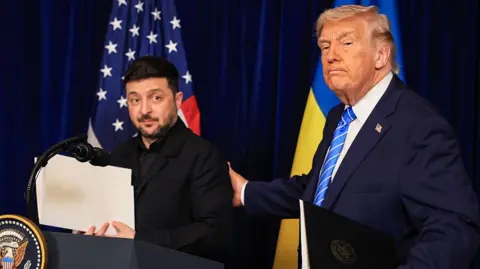
As the conflict between Russia and Ukraine approaches its fourth year, recent statements from both sides hint that a peace deal could be closer than ever. However, as President Donald Trump noted, several thorny issues remain, threatening the ongoing negotiations.
Two of the most challenging topics involve the fate of Ukraine’s territorial integrity, particularly the industrial Donbas region, and the control of Europe’s largest nuclear power facility, the Zaporizhzhia plant, which remains in Russian hands. The Kremlin expresses optimism about the negotiations but has steadfastly maintained its stance on retaining control over these areas.
Ukrainian President Volodymyr Zelensky has proposed a compromise in Donbas involving a demilitarized zone to protect citizens, a notion the Kremlin is unlikely to accept given its ongoing military presence. Zelensky emphasized that simply withdrawing from these regions is not an option, as it would mean abandoning thousands of residents.
In addition to territorial disputes, the condition and management of the Zaporizhzhia nuclear plant complicate the peace talks. Both nations have different visions for its operation, exacerbated by the fact that external power from Ukraine currently sustains the facility, which is in a prolonged state of cold shutdown.
The lack of mutual trust exacerbates the delicate situation, with sentiments running high on both sides. Ukraine is seeking security guarantees to protect against further Russian aggression, although Russia’s rejection of NATO troops complicates matters. Financial compensation for war losses and Ukraine’s aspirations to join NATO and the EU also add layers of complexity.
Despite a significant majority of Ukrainians favoring peace, skepticism remains regarding the genuineness of Russian intentions. Zelensky hinted at the need for a referendum to validate any final deal, a move likely to further delay an already complicated peace process.
As negotiations continue, the world watches closely to see if these thorny issues can be resolved or if they will further entrench the conflict.