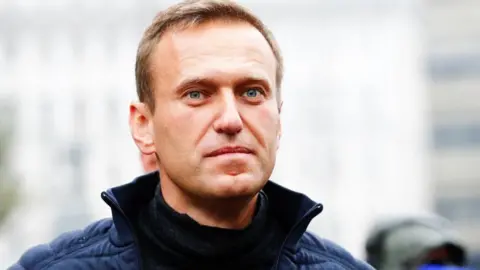
The British Foreign Office has stated that Russian opposition leader Alexei Navalny was assassinated using a poison derived from a dart frog toxin called epibatidine, two years after his death in a Siberian penal colony. This announcement comes after a thorough examination of material samples taken from Navalny's body, which confirmed the presence of the toxin, thus substantiating ongoing allegations against the Kremlin.
Foreign Secretary Yvette Cooper cited that 'only the Russian government had the means, motive, and opportunity' to deploy such a toxic agent against Navalny during his imprisonment.
The UK, along with Sweden, France, Germany, and the Netherlands, issued a joint statement asserting that the Russian state is held responsible for Navalny's death, with epibatidine found exclusively in certain South American dart frogs, suggesting it could not have originated from Russia.
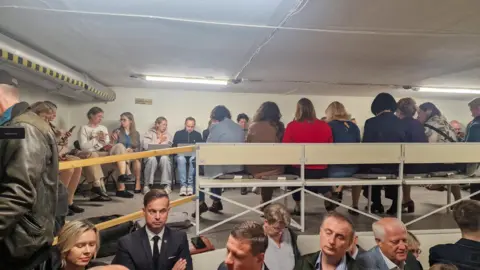
Speaking at the Munich Security Conference, Cooper met with Navalny's widow, Yulia, who had long claimed her husband was murdered. Navalny, an ardent anti-corruption campaigner, had previously survived an assassination attempt involving a Novichok nerve agent in 2020. He was imprisoned on charges widely criticized as politically motivated, with his sudden death occurring in February 2024 under suspicious circumstances.
UK Prime Minister Sir Keir Starmer honored Navalny's legacy, while French Foreign Minister Jean-Noël Barrot acknowledged his sacrifice for a democratic Russia. As tensions escalate over political assassinations, the Kremlin has yet to respond to these latest allegations.
Foreign Secretary Yvette Cooper cited that 'only the Russian government had the means, motive, and opportunity' to deploy such a toxic agent against Navalny during his imprisonment.
The UK, along with Sweden, France, Germany, and the Netherlands, issued a joint statement asserting that the Russian state is held responsible for Navalny's death, with epibatidine found exclusively in certain South American dart frogs, suggesting it could not have originated from Russia.
Speaking at the Munich Security Conference, Cooper met with Navalny's widow, Yulia, who had long claimed her husband was murdered. Navalny, an ardent anti-corruption campaigner, had previously survived an assassination attempt involving a Novichok nerve agent in 2020. He was imprisoned on charges widely criticized as politically motivated, with his sudden death occurring in February 2024 under suspicious circumstances.
UK Prime Minister Sir Keir Starmer honored Navalny's legacy, while French Foreign Minister Jean-Noël Barrot acknowledged his sacrifice for a democratic Russia. As tensions escalate over political assassinations, the Kremlin has yet to respond to these latest allegations.