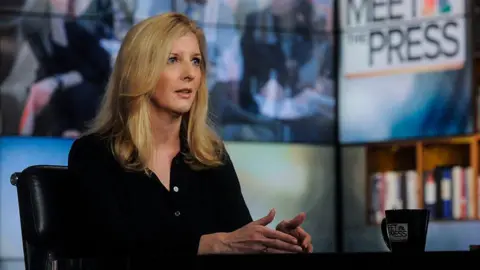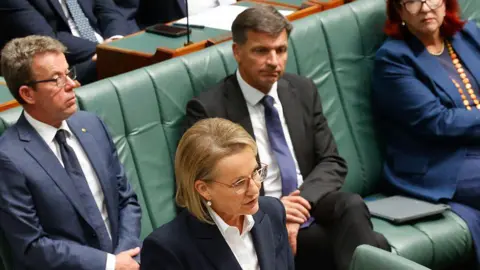
Australian opposition leader Sussan Ley, the first woman to head the Liberal Party, is under renewed pressure after the resignation of her shadow defence minister Angus Taylor.
His resignation paves the way for an expected leadership challenge. Local media say he has long been plotting to oust her.
Ley narrowly defeated Taylor in a leadership contest last year after her party's worst ever election loss. But since then, she has been plagued by poor poll numbers and infighting among the conservative Liberal-National coalition.
The coalition, a partnership dating back to the 1940s, has twice split and reunited under her leadership, further undermining her tenure.
Taylor, from the conservative faction of the party, announced on Wednesday that he quit the party leadership team, although he plans to continue to serve the Liberal Party.
We have failed to hold a bad Labor government to account, he told reporters, adding that the party needed to protect Australians' way of life and focus on restoring their standard of living.
He stated his belief that Ley was not able to lead the party effectively moving forward.
It remains uncertain if Taylor's allies within Ley's shadow cabinet will also resign.
According to local media, Taylor's supporters are expected to request a special party room meeting to discuss a potential spill motion, allowing for a contested leadership.
A potential victory for Taylor would put an end to months of uncertainty regarding Ley's leadership.
The coalition recently reunited after a split due to disagreements over hate speech laws, which Ley had advocated for following a significant incident at Bondi Beach last December, but were rejected by her Nationals colleagues.
The situation highlights a larger issue as Taylor's decision to leave the leadership team follows a series of polls indicating increasingly waning support for the Liberal party, which now faces competitor parties like One Nation gaining traction.
Political analysts note the pressure on Ley is mounting, as the Liberal Party struggles to redefine its identity following significant electoral setbacks and evolving voter preferences.