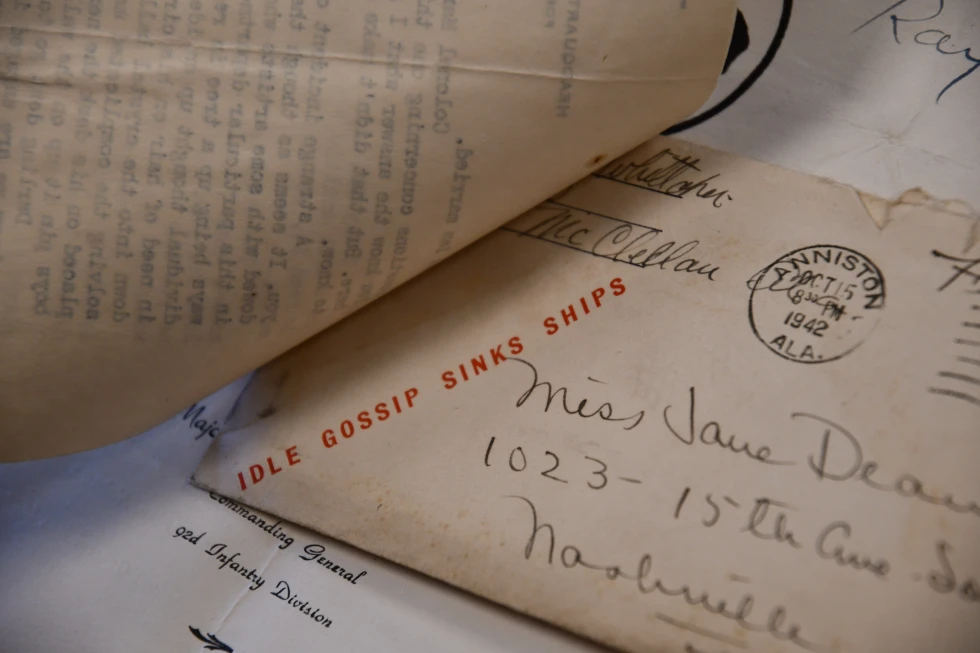
NASHVILLE, Tenn. — The Nashville Public Library has launched a digital exhibit showcasing over 200 unique love letters exchanged between William Raymond Whittaker and Jane Dean, illuminating their love story during World War II. Found in a Nashville home, these letters were donated to the Metro Nashville Archives in 2016 and now offer a rare glimpse into romance during tumultuous times.
Whittaker, originally from New Rochelle, New York, moved to Nashville to study at Meharry Medical College, where he met fellow student Jane Dean. Their love story faced challenges when Ray was drafted into the Army. While stationed at Fort Huachuca in Arizona, he reached out to Jane, then a lab technician at Vanderbilt University, reigniting their connection.
In her July 30, 1942, reply to him, Jane expressed mixed emotions—pleasure in hearing from him but sadness over the war's uncertainties. This correspondence not only represents their budding romance but also reflects the complicated realities of life during the war.
As the letters unfold, the warmth of their relationship captures the day-to-day struggles faced by soldiers and their loved ones. Jane’s skepticism about Ray's feelings and his responses reveal the emotional turmoil of wartime romance. The letters document Ray’s thoughts on marriage and Jane's sweet yet poignant reflections on their future together.
Ultimately, the couple married on November 7, 1942. In a subsequent letter, Jane lovingly addressed Ray as “my darling husband,” expressing both joy and sorrow as they navigated the challenges of separation post-marriage, illustrating their profound love amidst uncertainty.
The archive holds more than just letters; it encapsulates the sentiments of love, longing, and the societal issues faced during the 1940s, making it a vital resource for understanding America’s history and the personal narratives that accompany it.
Whittaker, originally from New Rochelle, New York, moved to Nashville to study at Meharry Medical College, where he met fellow student Jane Dean. Their love story faced challenges when Ray was drafted into the Army. While stationed at Fort Huachuca in Arizona, he reached out to Jane, then a lab technician at Vanderbilt University, reigniting their connection.
In her July 30, 1942, reply to him, Jane expressed mixed emotions—pleasure in hearing from him but sadness over the war's uncertainties. This correspondence not only represents their budding romance but also reflects the complicated realities of life during the war.
As the letters unfold, the warmth of their relationship captures the day-to-day struggles faced by soldiers and their loved ones. Jane’s skepticism about Ray's feelings and his responses reveal the emotional turmoil of wartime romance. The letters document Ray’s thoughts on marriage and Jane's sweet yet poignant reflections on their future together.
Ultimately, the couple married on November 7, 1942. In a subsequent letter, Jane lovingly addressed Ray as “my darling husband,” expressing both joy and sorrow as they navigated the challenges of separation post-marriage, illustrating their profound love amidst uncertainty.
The archive holds more than just letters; it encapsulates the sentiments of love, longing, and the societal issues faced during the 1940s, making it a vital resource for understanding America’s history and the personal narratives that accompany it.