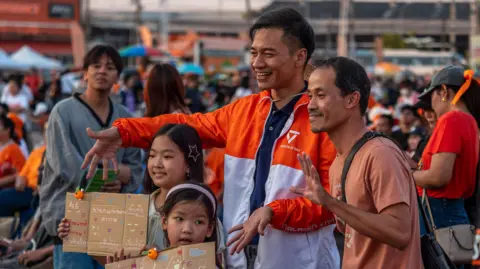
Suttasitt 'Macky' Pottasak is a typical candidate of Thailand's People's Party: young, idealistic and hardworking. He gave up a career in TV drama production in Bangkok to run in the last election, winning a rural seat near his home city of Nakhon Ratchasima from an old, established political family. He makes light-hearted videos about his party's policies daily, which are getting millions of views on social media.
Politics is something past generations made boring. I want to make it fun, he says. Opinion polls suggest that much of the Thai public agrees with the People's Party, consistently polling ahead of their rivals as the election draws near. However, winning an election in Thailand has historically been just the beginning.
The previous election produced a surprise win for the progressive Move Forward party, which campaigned on promises of sweeping reforms. Yet, powerful conservative forces blocked Move Forward from forming a government and ultimately dissolved the party. As the reforms proposed by Move Forward challenged the status quo, they faced pushback from the elite that controls much of Thailand's political landscape.
Now, the reformists are attempting another bid under the People's Party banner. Their youthful energy draws large crowds, but history teaches that public support does not guarantee success. The party's intentions to amend the military-drafted constitution confront considerable institutional resistance, including investigations into party members that could threaten their capacity to govern.
The party stood out for prioritizing systemic changes and modernizing aspects of governance, contrasting with their main rivals who focused on populist promises. As election results loom, all eyes remain on how the People's Party will navigate post-election obstacles, especially the potential for their leaders to be sidelined once more by conservative forces intent on maintaining their sway over the political landscape.