In brief
Following a Nipah virus outbreak in West Bengal, India, where several healthcare workers have been infected, neighboring Asian countries are tightening airport screenings for incoming travelers. With a significant fatality rate and a lack of effective treatment, the situation raises significant public health concerns.
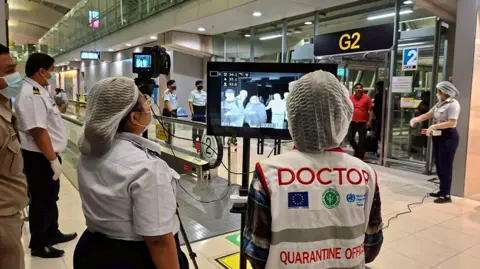
An outbreak of the deadly Nipah virus in India's West Bengal state has sparked concern in parts of Asia, leading to increased screening measures at airports. Thailand has initiated screenings at three airports that receive flights from West Bengal, while Nepal has begun checks at Kathmandu airport and other land border points with India.
Five healthcare workers in West Bengal were reported to be infected earlier this month, with one in critical condition. Approximately 110 individuals who came into contact with the infected have been placed under quarantine. The Nipah virus, which can be transmitted from animals to humans, has a high death rate—ranging from 40% to 75%—and no known vaccine or treatment exists.
The World Health Organization has highlighted Nipah as one of its top ten priority diseases due to its potential to trigger epidemics. The virus, which is primarily transmitted through contact with infected animals like bats and pigs or through contaminated food, manifests with a range of symptoms, including fever, headaches, and in severe cases, encephalitis.
Historically, India has faced Nipah outbreaks, notably in West Bengal and Kerala, with past incidents leading to significant fatalities. Current reports indicate several confirmed cases linked to a private hospital in Barasat, where healthcare workers have been particularly affected.
As precautionary measures are heightened, countries such as Thailand and Nepal are closely monitoring arrivals, urging travelers from affected regions to declare their health status upon entry. In Taiwan, health authorities are proposing to classify Nipah under a Category 5 disease to facilitate stricter control measures.