Something in Europe has snapped.
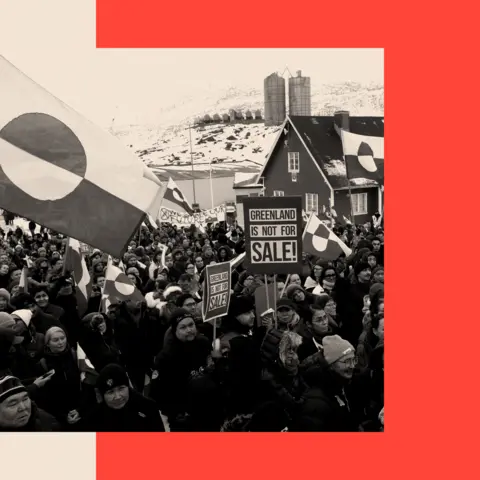
Donald Trump doubled down again on Monday night in his insistence that the U.S. has to have Greenland for national security reasons. He predicted that Europe's leaders aren't gonna push back too much. But that's not the plan they have in mind when their paths cross with the U.S. president at the World Economic Forum (WEF) on Wednesday.
Greenland is a semi-autonomous territory of Denmark - a member of the EU and NATO. Trump is leaning heavily on Denmark's allies in both those organizations to abandon Copenhagen and let the U.S. take control of Greenland, or face punitive taxes on all their exports to the United States. This presents a dire scenario for European economies already struggling, especially those reliant on U.S. exports.
Germany's finance minister stated, “we will not allow ourselves to be blackmailed,” after an emergency meeting with his French counterpart. The Trump threats struck hard against European governments, who had only just settled tariff deals with the U.S. last year.
France's finance minister, Roland Lescure, articulated the unprecedented nature of the situation: We're living through uncharted territories. We've never seen this before... an ally, a friend of 250 years, is considering using tariffs as a geopolitical weapon. His German counterpart Lars Klingbeil added, A line has been crossed, and emphasized that Europe must be prepared.
Suddenly, the softly-softly approach to Trump seems outdated. The EU aims to approach the U.S. in Switzerland this week with a blend of diplomacy and a show of force. European leaders are supporting Trump regarding Arctic security, indicating there’s no need for him to act unilaterally over Greenland.
Simultaneously, EU diplomats have indicated possible retaliation with up to €93 billion in tariffs on U.S. goods if Trump proceeds with his Greenland tariffs. Such measures would have repercussions for U.S. consumers too, as European Union investors significantly employ millions of Americans across the U.S.
Despite these tensions, the EU expresses a need to engage rather than escalate. Europe's political leaders express concern that if they adopt a confrontational stance with Trump, they risk further alienating the U.S. while simultaneously needing to maintain strong assistance from Washington for European security needs.
The ongoing dynamics hint at a transformed European approach, as they increasingly recognize the need to assert their interests and sovereignty in the face of unconventional U.S. policies.