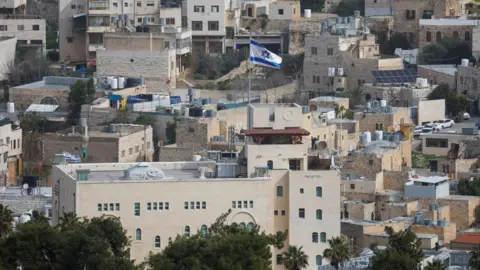
A Palestinian official in the occupied West Bank has described Israel's latest expansion of control there as 'the end of the road' for negotiations between Israelis and Palestinians.
Asma al-Sharabati, acting mayor of Hebron, said new legal changes recently announced by Israeli cabinet ministers would leave Palestinian authorities shut out of decisions on urban planning and development, even in areas under Palestinian control.
Hebron, a city divided between 33,000 Palestinians and about 800 Jewish settlers, frequently experiences tensions. Al-Sharabati indicated that these changes symbolize a significant shift away from established norms, further escalating an already challenging landscape for Palestinians.
On Sunday, the Israeli security cabinet passed major changes that include transferring municipal service provision to Israeli authorities in Palestinian-governed areas, in addition to imposing broad oversight on “heritage sites.” The caveat as mentioned by Israeli officials is to protect various resources, although Palestinians view this as a direct infringement on their rights.
Al-Sharabati voiced her discontent stating, 'We are living the ugly truth that we are not protected.' She highlighted the lack of response from international institutions amidst growing violence, particularly citing the ongoing plight in Gaza.
With the sweeping changes, Israel has not only redefined its governance over Palestinian territories but created an environment ripe for further strife, as the words of Palestinian activists parallel the mayor's sentiments about the shifting landscape being tantamount to annexation; an act widely deemed illegal under international law.
Furthermore, these legal amendments have sparked outrage among Palestinian leaders, with President Mahmoud Abbas calling for a strong response from the US. Critics fear this escalation is detrimental to any hopes of peace.
As the situation evolves, Hebron stands at a critical point, where the implications of these policies may resonate far beyond its borders, impacting future negotiations for peace in the region.