A Palestinian official in the occupied West Bank has described Israel's latest expansion of control there as 'the end of the road' for negotiations between Israelis and Palestinians. Asma al-Sharabati, acting mayor of Hebron, expressed deep concern regarding new legal changes recently announced by Israeli cabinet ministers, which would leave Palestinian authorities shut out of decisions on urban planning and development, even in areas under Palestinian control.
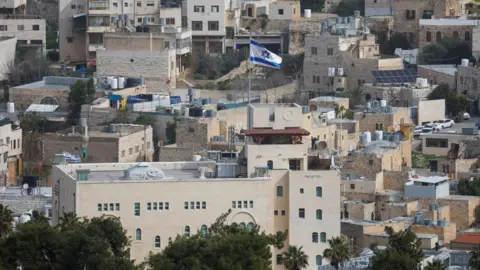
Hebron is a regular flashpoint in the West Bank - a divided city, where soldiers guard hundreds of Israeli settlers living alongside Palestinians in an Israeli military garrison. On Sunday, the Israeli security cabinet enacted significant changes to the division of powers in the West Bank that have endured for three decades under the US-backed Oslo Accords.
These changes include expanding Israeli control beyond military occupation into the provision of municipal services in Palestinian-run areas and granting broad powers to secure so-called 'heritage sites' throughout the West Bank. Israel announced that it intends to take over planning authority at the Cave of the Patriarchs in Hebron, a site of immense significance.
Al-Sharabati lamented that the new policies allow Israel to declare any building 'ancient' and excludes Palestinian authorities from urban planning decisions, stating, 'Now they can simply put their hands on any building... the Palestinian authorities are not part of any decision.'
In a dire depiction of life in Hebron, al-Sharabati stated, 'We are not protected,' voicing frustration that the international community had failed to safeguard Palestinian rights amid rising tensions following the Israeli actions. Her sentiments reflect a growing concern—especially after President Mahmoud Abbas urged the US for a 'firm response' to disrupt Israeli actions that violate international law.
The implications of these decisions resonate deeply, suggesting that ongoing Israeli measures may stifle the aspirations for a Palestinian state, as emphasized by statements from Israeli officials claiming a commitment to deepening their roots in disputed territories.
Hebron is a regular flashpoint in the West Bank - a divided city, where soldiers guard hundreds of Israeli settlers living alongside Palestinians in an Israeli military garrison. On Sunday, the Israeli security cabinet enacted significant changes to the division of powers in the West Bank that have endured for three decades under the US-backed Oslo Accords.
These changes include expanding Israeli control beyond military occupation into the provision of municipal services in Palestinian-run areas and granting broad powers to secure so-called 'heritage sites' throughout the West Bank. Israel announced that it intends to take over planning authority at the Cave of the Patriarchs in Hebron, a site of immense significance.
Al-Sharabati lamented that the new policies allow Israel to declare any building 'ancient' and excludes Palestinian authorities from urban planning decisions, stating, 'Now they can simply put their hands on any building... the Palestinian authorities are not part of any decision.'
In a dire depiction of life in Hebron, al-Sharabati stated, 'We are not protected,' voicing frustration that the international community had failed to safeguard Palestinian rights amid rising tensions following the Israeli actions. Her sentiments reflect a growing concern—especially after President Mahmoud Abbas urged the US for a 'firm response' to disrupt Israeli actions that violate international law.
The implications of these decisions resonate deeply, suggesting that ongoing Israeli measures may stifle the aspirations for a Palestinian state, as emphasized by statements from Israeli officials claiming a commitment to deepening their roots in disputed territories.