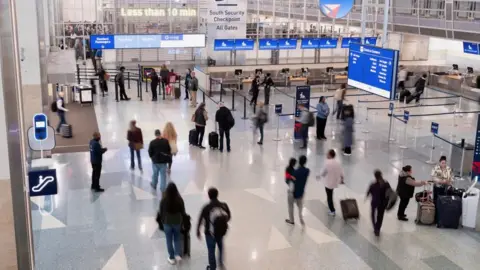
Travel groups and airlines are warning of potential disruption as the US federal government partially shut down after lawmakers failed to reach a deal on funding the Department of Homeland Security (DHS). Several groups, including Airlines for America, stated that without a deal, the risk of unscheduled absences by Transportation Security Administration workers increased, which could lead to flight delays and longer wait times at airports.
Travellers and the US economy cannot afford to have essential TSA personnel working without pay, they expressed in a joint statement issued on Friday.
The partial government shutdown began at midnight (05:00 GMT) on Saturday after Congress failed to pass a bill to fund DHS operations. In exchange for a funding deal, Democrats had been advocating for more restrictions on US Immigration and Customs Enforcement (ICE). Although these reforms won't be significantly affected by the shutdown due to previous funding arrangements, they remain central to ongoing negotiations amidst political tensions.
Democrats have been seeking various changes within the DHS following concerns about the actions of federal agents during immigration raids. They emphasize the need for better identification protocols for officers and stricter rules around obtaining warrants.
This recent funding failure comes on the heels of a historical 43-day government shutdown last year, which resulted in numerous federal workers going unpaid and chaos within air travel. Current indications suggest that while the TSA may experience longer lines due to potential unscheduled staff absences, the Federal Aviation Administration is fully funded through the end of the year, potentially mitigating some impacts compared to previous shutdowns.
Congress is scheduled to recess until February 23, and the ongoing shutdown could extend until the State of the Union address on February 24 if an agreement isn’t reached sooner. However, lawmakers may be summoned back early if substantial progress on a deal becomes apparent. The shutdown could severely affect TSA operations and the US Coast Guard, with the latter warning that ongoing funding issues could halt non-critical missions due to financial constraints.
Travellers and the US economy cannot afford to have essential TSA personnel working without pay, they expressed in a joint statement issued on Friday.
The partial government shutdown began at midnight (05:00 GMT) on Saturday after Congress failed to pass a bill to fund DHS operations. In exchange for a funding deal, Democrats had been advocating for more restrictions on US Immigration and Customs Enforcement (ICE). Although these reforms won't be significantly affected by the shutdown due to previous funding arrangements, they remain central to ongoing negotiations amidst political tensions.
Democrats have been seeking various changes within the DHS following concerns about the actions of federal agents during immigration raids. They emphasize the need for better identification protocols for officers and stricter rules around obtaining warrants.
This recent funding failure comes on the heels of a historical 43-day government shutdown last year, which resulted in numerous federal workers going unpaid and chaos within air travel. Current indications suggest that while the TSA may experience longer lines due to potential unscheduled staff absences, the Federal Aviation Administration is fully funded through the end of the year, potentially mitigating some impacts compared to previous shutdowns.
Congress is scheduled to recess until February 23, and the ongoing shutdown could extend until the State of the Union address on February 24 if an agreement isn’t reached sooner. However, lawmakers may be summoned back early if substantial progress on a deal becomes apparent. The shutdown could severely affect TSA operations and the US Coast Guard, with the latter warning that ongoing funding issues could halt non-critical missions due to financial constraints.