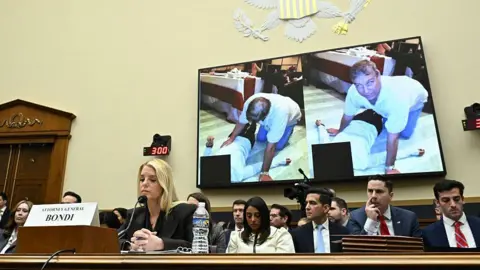
U.S. Attorney General Pam Bondi defended the justice department's handling of the files on the late sex offender Jeffrey Epstein and faced a barrage of angry questions during a fiery congressional hearing. Her testimony before the House of Representatives Judiciary Committee at times descended into a shouting match, with Bondi calling a Democratic lawmaker a 'washed-up loser' and one member storming out in protest.
The four-hour hearing highlighted key issues raised by lawmakers, including the release of millions of documents related to Epstein's case and the subsequent concerns regarding the protection of victims' identities. Several of Epstein’s victims were present in the audience, further intensifying the scrutiny on Bondi as she addressed accusations related to improper redactions that exposed the identities of vulnerable survivors.
During the session, Bondi characterized Epstein as a 'monster' while expressing condolences to the victims, yet faced sharp criticism from lawmakers who argued that the justice department failed to redact survivor names as legally required. One Congresswoman notably highlighted incidents where nude images of survivors had been included in the released files, prompting calls for a formal apology from Bondi.
Additionally, questions arose regarding the handling and oversight of Ghislaine Maxwell, Epstein's accomplice, and whether she should be transferred back to a maximum-security facility.
As the tension mounted, both Democratic and Republican lawmakers expressed their frustrations with the justice department's practices, indicating a bipartisan consensus on the need for accountability in handling sensitive information related to Epstein’s case. Bondi defended the department's efforts, maintaining that any inadvertent exposures of names were quickly rectified.
The hearing also touched upon broader issues surrounding law enforcement actions, particularly concerning federal immigration incidents in Minneapolis that had drawn nationwide attention.
In summary, Bondi's testimony reflects ongoing concerns about the justice department's approach to sensitive investigations and the protection of victims, amid a complex fallout from the Epstein saga.
The four-hour hearing highlighted key issues raised by lawmakers, including the release of millions of documents related to Epstein's case and the subsequent concerns regarding the protection of victims' identities. Several of Epstein’s victims were present in the audience, further intensifying the scrutiny on Bondi as she addressed accusations related to improper redactions that exposed the identities of vulnerable survivors.
During the session, Bondi characterized Epstein as a 'monster' while expressing condolences to the victims, yet faced sharp criticism from lawmakers who argued that the justice department failed to redact survivor names as legally required. One Congresswoman notably highlighted incidents where nude images of survivors had been included in the released files, prompting calls for a formal apology from Bondi.
Additionally, questions arose regarding the handling and oversight of Ghislaine Maxwell, Epstein's accomplice, and whether she should be transferred back to a maximum-security facility.
As the tension mounted, both Democratic and Republican lawmakers expressed their frustrations with the justice department's practices, indicating a bipartisan consensus on the need for accountability in handling sensitive information related to Epstein’s case. Bondi defended the department's efforts, maintaining that any inadvertent exposures of names were quickly rectified.
The hearing also touched upon broader issues surrounding law enforcement actions, particularly concerning federal immigration incidents in Minneapolis that had drawn nationwide attention.
In summary, Bondi's testimony reflects ongoing concerns about the justice department's approach to sensitive investigations and the protection of victims, amid a complex fallout from the Epstein saga.