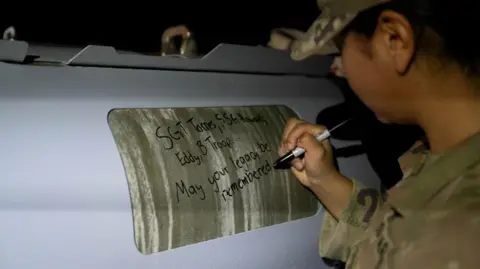
The US military has conducted what it describes as a massive strike against the Islamic State group (IS) in Syria, aimed at retaliating for the recent attack that killed two American soldiers. The operation, known as Operation Hawkeye Strike, was announced by US Central Command (Centcom) and involved the use of fighter jets, attack helicopters, and artillery, targeting over 70 locations across central Syria.
Centcom stated that more than 100 precision munitions were utilized to hit known IS infrastructure and weapons sites. In an official statement, President Donald Trump emphasized the severity of the strikes, claiming, we are striking very strongly against IS strongholds following the deadly ambush that occurred in Palmyra on December 13, resulting in the deaths of two US soldiers and a civilian interpreter.
The attacks were coordinated with assistance from the Jordanian military, with aims to prevent extremist groups from threatening regional security. Admiral Brad Cooper, commander of Centcom, declared the US's commitment to relentlessly pursuing those who pose a risk to American personnel and allies in the area.
Reports indicate that at least five IS members were killed, including a cell leader responsible for drone operations, while further assessments of casualties could not be verified immediately by the BBC.
US Defence Secretary Pete Hegseth framed the operations as a declaration of vengeance against those who threaten Americans globally. If you target Americans – anywhere in the world – you will find the United States hunting you down, Hegseth warned.
Additionally, the US has maintained a military presence in Syria since 2015, and recent engagements signal an intensified response towards IS threats, particularly as the group is believed to still harbor thousands of fighters in Iraq and Syria.
In 2019, a US-backed alliance confirmed the loss of IS's last territorial stronghold; however, the group has remained active in carrying out attacks.