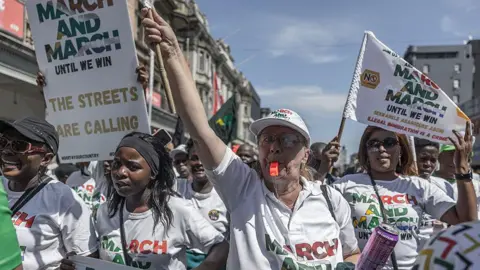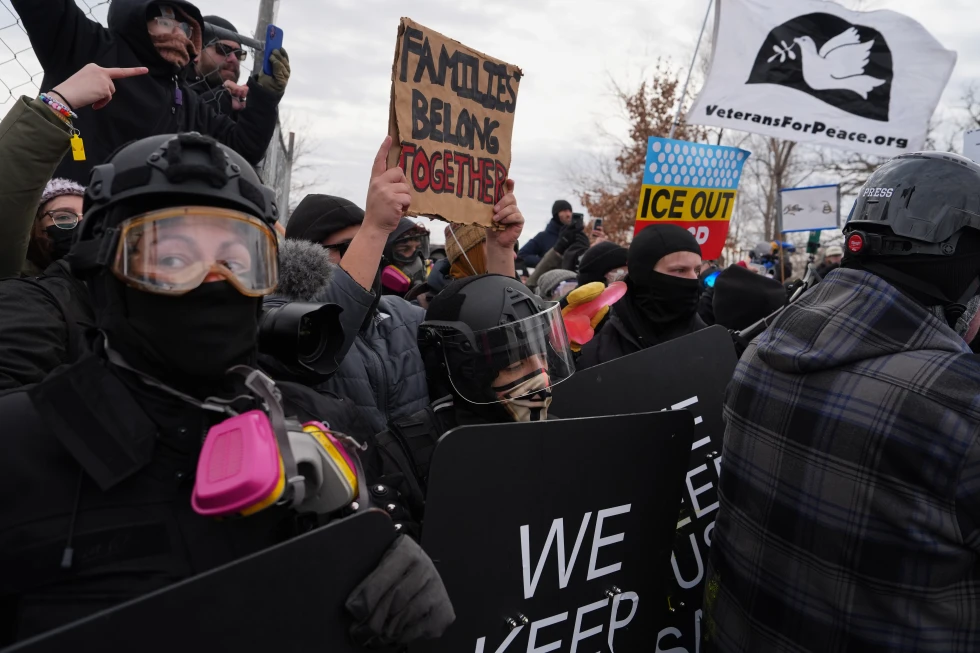
MINNEAPOLIS (AP) — Protests erupted outside the Bishop Henry Whipple Federal Building on Saturday, marking one month since the tragic shooting of Renee Good, a Minnesota woman killed by immigration officers. The event drew hundreds of demonstrators, leading to confrontations with police and at least several arrests.
Good was shot dead on January 7 while attempting to flee from immigration agents near her home. Her death, alongside that of Alex Pretti on January 24, has stirred significant outrage and calls for change regarding the ongoing immigration crackdown. Protesters rallied against these federal operations, arguing they constitute an unjust occupation of their communities.
At noon, demonstrators became agitated, throwing bottles and other objects at police who were guarding the federal facility. The Minnesota Star Tribune reported that the situation escalated when some protesters hurled chunks of ice, prompting police to declare the gathering unlawful. Participants began to disperse, though approximately 100 stood in defiance against law enforcement.
In tandem with the protest, a separate memorial gathering took place in a local park, where community members paid tribute to Good and Pretti. This event featured a ceremony led by Lakota Chief Arvol Looking Horse, alongside musical performances and shared poetry, honoring the significant impact of Good's and Pretti's narratives in the larger immigration discourse.
A video captured the harrowing moment of Good’s death, wherein an immigration officer approached her vehicle and fired as she tried to flee. The Trump administration has characterized her as a threat, a description that local officials contest as deeply misleading.
Following these events, Becca Good, Renee's wife, condemned the Trump administration's immigration policies and called for recognition of all families affected by ICE actions, emphasizing their community-wide impact.
As the situation evolves, the future of immigration enforcement in Minnesota remains in flux, with mixed responses from local and federal authorities regarding the ongoing presence of immigration officers.