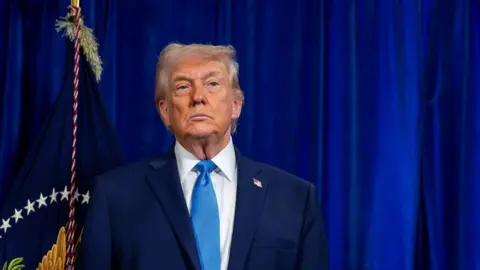
With the seizure of Venezuelan leader Nicolás Maduro, Donald Trump has demonstrated more powerfully than ever his belief in the power of his will, backed by raw US military force. On his orders, the US has placed Maduro behind bars and is set to 'run' Venezuela.
The US President made this startling announcement in a news conference at his Mar-a-Lago estate, which has significant implications for US foreign policy globally. Trump stated that the US will oversee Venezuela 'until such time as we can do a safe, proper and judicious transition.'
US Secretary of State Marco Rubio revealed that he had communicated with Venezuelan Vice-President Delcy Rodríguez, who indicated compliance with US demands.
However, the details surrounding the operation were vague. Trump mentioned, 'we're not afraid of boots on the ground if we have to have [them].' This raises questions about whether he believes governance can be achieved remotely and how whether this show of military might can compel compliance from Latin American leaders.
The consensus suggests the journey ahead will be fraught with challenges. The International Crisis Group has warned that Maduro's fall could lead to violence and instability within Venezuela. Additionally, past instances of US military intervention, like in Iraq and Afghanistan, suggest that the end of military operations is often just the beginning of greater chaos.
Maduro's removal, while welcomed by many Venezuelans frustrated with his rule, poses significant questions about US intentions and the potential for future interventions in Latin America.
Trump’s declaration hinted at a broader Monroe Doctrine governing US interactions with its southern neighbors, suggesting that challenges from leaders like Colombia’s Gustavo Petro or even future plans regarding Cuba should be expected.
Critics warn that the implications of the US’s military action threaten the established international order, undermining the principles laid out in international law. As leaders like China's respond with condemnation, the operation could provoke a reevaluation of how authoritarian regimes justify their own aggressive actions.
Overall, Donald Trump’s bold move may lead the world into a new era of turbulence, where the norms governing international relations could be drastically altered.