An unusual battle is unfolding over the Winter Olympics in Milan - not on the slopes or in the rinks, but on the internet.
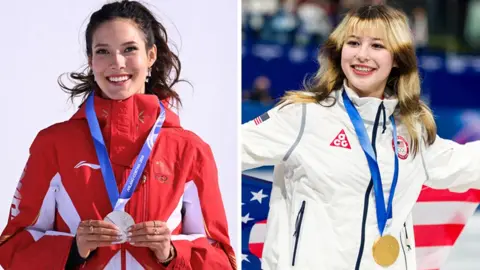
At its heart are Eileen Gu, a freestyle skier, and Alysa Liu, a figure-skater. Both are young women of American-Chinese heritage, champions in their fields, yet portrayed in starkly different lights: Gu is hailed as a trailblazer while Liu is seen by some as a traitor.
The divide highlights their contrasting paths: Liu, whose father fled China post-Tiananmen, competes under the US flag, while Gu, who spent her summers in Beijing, represents China. Social media has amplified these narratives, showcasing the cultural split and underlying tensions in US-China relations.
Gu's journey began in California, where she was raised by her venture capitalist mother. She switched to skiing for China to inspire young athletes and achieved remarkable success at the Beijing Olympics. In contrast, Liu’s accolades stem from a legacy deeply rooted in activism, making her a symbol of patriotism in America.
The discussions surrounding these Olympians extend beyond sports, embedding complex themes of loyalty, identity, and the immigrant experience, illustrating the societal pressures intertwined with national representation.
Comments and comparisons made about their choices evoke national pride and discussions on class dynamics, with Gu often viewed as a wealthy elite making a 'mercenary' choice, while Liu is celebrated as a relatable patriot. The ongoing narrative during these Olympics reflects larger questions about culture and allegiance in a divided geopolitical landscape.