In brief
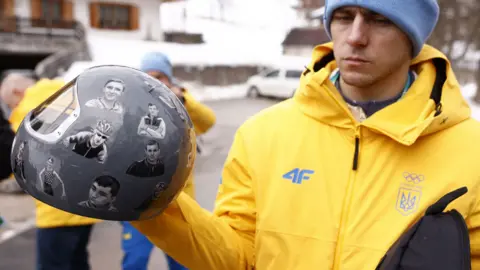
Vladyslav Heraskevych, a Ukrainian skeleton racer, was banned from the Winter Olympics after refusing to remove his helmet adorned with portraits of athletes who died in the war against Russia. This action has sparked debate over personal expression in sports during ongoing conflict.
Ukrainian slider Vladyslav Heraskevych's disqualification from the Winter Olympics over his helmet depicting fellow athletes killed since Russia's full-scale invasion is the Games' biggest controversy so far.
Heraskevych was barred from the men's skeleton in Milan-Cortina earlier this week after he refused to stop wearing it, and on Friday, his appeal was denied.
He has stated that those featured on his helmet include teenage weightlifter Alina Peregudova, boxer Pavlo Ishchenko, and ice hockey player Oleksiy Loginov, adding that some were his friends. In total, more than 20 athletes appear on the helmet, each representing the devastating impact of the ongoing conflict on Ukraine's sports community.
The helmet serves as a powerful statement of remembrance, illustrating the intersection of sports and the harsh realities faced by athletes amid war. As discussions continue about the consequences of wearing such symbolic items at international competitions, Heraskevych's act of defiance stands out as a poignant reminder of the lives lost and the ongoing struggle for dignity in the world of sports.