In brief
Israel announced it will revoke the licenses of 37 international NGOs, including prominent groups like ActionAid and Médecins Sans Frontières, citing compliance issues under new registration rules. This decision has drawn condemnation from various nations, who emphasize the critical role these organizations play in providing humanitarian aid in Gaza. The move is expected to result in severe restrictions on vital services as 10 countries express deep concerns about the implications on the already fragile humanitarian situation.
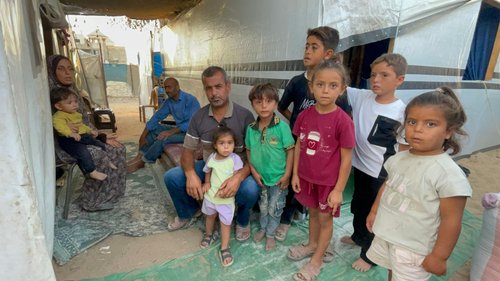
Israel is to revoke the licences of 37 international non-governmental organisations (INGOs) working in Gaza and the occupied West Bank, saying they failed to meet requirements under new registration rules.ActionAid, International Rescue Committee, Médecins Sans Frontières and Norwegian Refugee Council are among the aid agencies which will have their licences suspended on 1 January, with their operations to end within 60 days. Israel said they had, among other things, failed to hand over complete personal details of their staff. The INGOs said that could put them at risk.The move was condemned by 10 countries, which said the rules would have a severe impact on access to essential services.In a joint statement, the foreign ministers of the UK, France, Canada, Denmark, Finland, Iceland, Japan, Norway, Sweden and Switzerland said INGOs were integral to the humanitarian response in Gaza and that any attempt to stem their ability to operate was unacceptable. Without them, it will be impossible to meet all urgent needs at the scale required, they warned.The European Union's humanitarian chief, Hadja Lahbib, said: Israel's plans to block INGOs in Gaza means blocking life-saving aid. International humanitarian law leaves no room for doubt: aid must reach those in need, she added.The Humanitarian Country Team of the Occupied Palestinian Territory - a forum that brings together UN agencies and more than 200 local and international NGOs - urged the Israeli authorities to reconsider the registration decisions. It has said INGOs run or support most of Gaza's field hospitals and primary healthcare centres, emergency shelter responses, water and sanitation services, nutrition stabilisation centres for children with acute malnutrition, and critical mine action activities.Israel's ministry of diaspora affairs, which oversees registration applications, said the new measures would not impact the flow of humanitarian assistance to Gaza. It said aid continued to be delivered through approved and vetted channels, including UN agencies, bilateral partners, and humanitarian organisations.Israeli military body Cogat, which controls Gaza's crossings and co-ordinates aid deliveries, meanwhile said the INGOs facing suspension did not bring aid into Gaza throughout the current ceasefire, which began 11 weeks ago. It added that even in the past their combined contribution amounted to only about 1% of the total aid volume.The diaspora affairs ministry said the primary reason INGOs had their licences revoked was the refusal to provide complete and verifiable information regarding their employees, which it said was critical to preventing the infiltration of terrorist operatives into humanitarian structures.MSF said it took such allegations extremely seriously and that it would never knowingly employ people engaging in military activity.Any employee who engages in military activity would pose a danger to our staff and our patients. Publicly making such claims without substantiated evidence puts humanitarian staff at risk and undermines life-saving medical work, it added.The war in Gaza was triggered by the Hamas-led attack on southern Israel on 7 October 2023, in which about 1,200 people were killed and 251 others were taken hostage. More than 71,260 people have been killed in Israeli attacks in Gaza since then, according to the territory's Hamas-run health ministry.