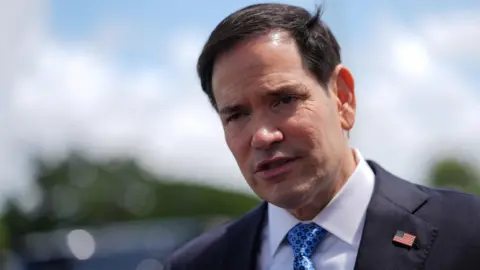
US Secretary of State Marco Rubio has declared Cuba a 'national security threat' to the United States, stating the likelihood of a peaceful diplomatic resolution with Havana is 'not high' amid escalating tensions. The remarks come just one day after the US government charged Cuba's former president Raúl Castro with murder for the 1996 downing of two US planes that killed American nationals.
Speaking to reporters Thursday, Rubio emphasized that diplomacy remains Washington's 'preference' with Cuba but warned President Donald Trump retains the 'right and obligation' to protect the country from perceived threats. 'I'm just being honest with you, you know, the likelihood of that happening, given who we're dealing with right now, is not high,' he stated, adding Cuba is 'one of the leading sponsors of terrorism in the entire region.'
Cuba's Foreign Minister Bruno Rodríguez immediately dismissed Rubio's claims as 'lies,' asserting the island has 'never posed a threat' to the US. He accused the US government of 'ruthlessly and systematically' attacking Cuba while attempting to 'instigate a military aggression.'
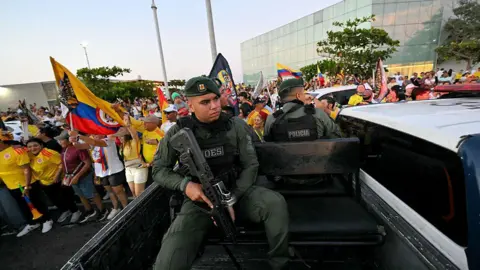
The Cuban government's allegations align with mounting humanitarian crises on the island, where citizens face severe fuel shortages, extended blackouts, and food rationing exacerbated by the US oil blockade. Despite this, Rubio confirmed Cuba accepted a $100 million US humanitarian aid offer.
Trump has repeatedly framed Cuba as a 'failed country,' claiming his administration aims to help Cuba 'on a humanitarian basis' while stating Cuban-Americans 'want to go back to their country' to aid its revival. 'Other presidents have looked at this for 50, 60 years doing something and it looks like I'll be the one that does it,' Trump asserted.
The indictment of Castro—described by US officials as related to the 1996 incident—has drawn international condemnation from Russia and China. Some analysts view the legal action as reminiscent of Trump's 2024 seizure of Venezuelan President Nicolás Maduro. When pressed on how the US would transport Castro to face charges, Rubio refused to elaborate: 'I'm not going to talk about how we're going to get him here, if we were trying to get him here, why would I say to the media what our plans are about that?'}
Speaking to reporters Thursday, Rubio emphasized that diplomacy remains Washington's 'preference' with Cuba but warned President Donald Trump retains the 'right and obligation' to protect the country from perceived threats. 'I'm just being honest with you, you know, the likelihood of that happening, given who we're dealing with right now, is not high,' he stated, adding Cuba is 'one of the leading sponsors of terrorism in the entire region.'
Cuba's Foreign Minister Bruno Rodríguez immediately dismissed Rubio's claims as 'lies,' asserting the island has 'never posed a threat' to the US. He accused the US government of 'ruthlessly and systematically' attacking Cuba while attempting to 'instigate a military aggression.'
The Cuban government's allegations align with mounting humanitarian crises on the island, where citizens face severe fuel shortages, extended blackouts, and food rationing exacerbated by the US oil blockade. Despite this, Rubio confirmed Cuba accepted a $100 million US humanitarian aid offer.
Trump has repeatedly framed Cuba as a 'failed country,' claiming his administration aims to help Cuba 'on a humanitarian basis' while stating Cuban-Americans 'want to go back to their country' to aid its revival. 'Other presidents have looked at this for 50, 60 years doing something and it looks like I'll be the one that does it,' Trump asserted.
The indictment of Castro—described by US officials as related to the 1996 incident—has drawn international condemnation from Russia and China. Some analysts view the legal action as reminiscent of Trump's 2024 seizure of Venezuelan President Nicolás Maduro. When pressed on how the US would transport Castro to face charges, Rubio refused to elaborate: 'I'm not going to talk about how we're going to get him here, if we were trying to get him here, why would I say to the media what our plans are about that?'}