Nazakat Ali's phone rings in the evening, as it often does now. The 30-year-old tourist guide in Indian-administered Kashmir answers with the same practiced calm every time - yes, it is safe; yes, he will be there; yes, they should come. On the other end are people planning holidays to the stunning Himalayan region, known for its mountains and meadows. There is a lot of fear, he says. We have to convince them that everything is fine.
A year after militants killed 26 people in Pahalgam town - one of the deadliest attacks on tourists in Kashmir in decades - the region's tourism economy has yet to recover. In the weeks that followed, authorities shut 48 of 87 tourist sites in the region. Visitor numbers fell sharply, from nearly three million in 2024 to under 1.2 million in 2025, according to official data. Some sites have since reopened, but Baisaran meadow - where the killings took place - remains closed.
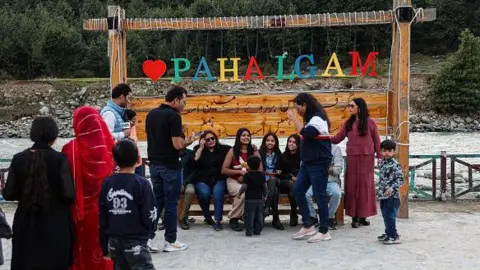
The assault struck at the heart of a fledgling industry that has endured despite years of uncertainty. Tourists visiting Pahalgam have returned cautiously; Kiran Rao from Kerala acknowledged initial security concerns but felt good to be there. However, for many locals, the trauma from last year's attack lingers. The recent violence has prompted increased military presence and the demolition of homes linked to suspects, leading to criticisms of collective punishment.
The pervasive sense of insecurity has created a ripple effect, stalling local businesses that relied on tourism. Many hotels, once bustling with guests, now suffer from high vacancy rates. Guides like Nazakat Ali continue to assure potential visitors of safety, but the trust has weakened. Abdul Waheed Bhat, head of the pony riders' association, expressed the sentiment that this attack has sent a very negative message. Despite officials touting a favorable security outlook, uncertainty remains paramount for those dependent on tourism until confidence can fully be restored in this serene yet now scarred landscape.
A year after militants killed 26 people in Pahalgam town - one of the deadliest attacks on tourists in Kashmir in decades - the region's tourism economy has yet to recover. In the weeks that followed, authorities shut 48 of 87 tourist sites in the region. Visitor numbers fell sharply, from nearly three million in 2024 to under 1.2 million in 2025, according to official data. Some sites have since reopened, but Baisaran meadow - where the killings took place - remains closed.
The assault struck at the heart of a fledgling industry that has endured despite years of uncertainty. Tourists visiting Pahalgam have returned cautiously; Kiran Rao from Kerala acknowledged initial security concerns but felt good to be there. However, for many locals, the trauma from last year's attack lingers. The recent violence has prompted increased military presence and the demolition of homes linked to suspects, leading to criticisms of collective punishment.
The pervasive sense of insecurity has created a ripple effect, stalling local businesses that relied on tourism. Many hotels, once bustling with guests, now suffer from high vacancy rates. Guides like Nazakat Ali continue to assure potential visitors of safety, but the trust has weakened. Abdul Waheed Bhat, head of the pony riders' association, expressed the sentiment that this attack has sent a very negative message. Despite officials touting a favorable security outlook, uncertainty remains paramount for those dependent on tourism until confidence can fully be restored in this serene yet now scarred landscape.