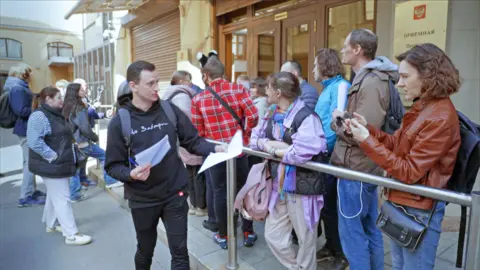
Near the Kremlin, citizens are lining up outside the presidential administration office to submit petitions urging President Vladimir Putin to halt the stringent internet crackdown shaped by the Russian authorities. Users encounter difficulties as access to global messaging apps is limited, and mobile internet services are frequently disrupted.
Petitioning the president is within legal rights; however, in an oppressive environment, many place themselves at risk simply by voicing their concerns. Security personnel observe and record the petitioners, heightening the intimidating atmosphere.
An opinion shared by Yulia, a local business owner, echoes the sentiments of fear and frustration: I'm very scared. I'm shaking. Putin has acknowledged these disruptions as necessary measures for national security, yet citizens report that the closures disrupt their daily lives and businesses, causing significant economic losses.
Russian officials argue the internet curbs are to protect public safety, with claims that mobile internet blackouts are meant to disorient Ukrainian attack drones; however, many see little evidence supporting this rationale. Amid mounting tension, there is a growing impatience with the Kremlin’s insistence on curtailing freedoms under the guise of security.
The government is promoting a state-approved messaging service called MAX while simultaneously cracking down on popular social media platforms. Critics and the public remain skeptical, suspecting that stringent internet policies aim to construct a digital wall separating Russians from the outside world—an echo of past political isolation.
As internet disruptions persist, citizens express their frustration. Ordinary Russians like Yulia Grekova, who attempted to organize a protest against Internet restrictions, encounter widespread repression, with local authorities rejecting requests to assemble. Efforts to address grievances are repeatedly thwarted, reinforcing a sense of futility.
Frustrated citizens voice their growing discontent over restrictions affecting various critical services. From finding transportation to maintaining small businesses, the impact is felt across the board. The sense of anger is palpable as Russians navigate everyday life amidst oppressive internet policies, with many reflecting on how these challenges reflect broader political dissatisfaction with Putin's administration.
While the future remains uncertain, it’s evident that the Kremlin's tightening grip on the internet may inadvertently stoke the fires of public discontent, as citizens increasingly connect their daily struggles to government actions and policies. As frustrations simmer and escalate, the potential for a broader movement against repression grows, marking a significant moment in Russia's ongoing narrative.