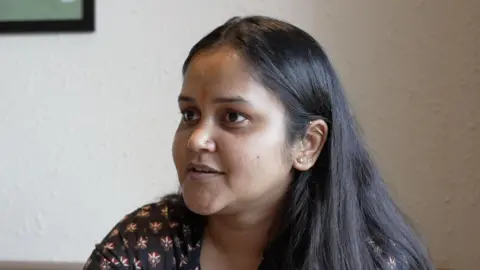
One year after a deadly attack on tourists in Indian-administered Kashmir, the families of the victims are still learning how to live with their losses. In the room she once shared with her husband, Aishanya Dwivedi points to a mirror on the wall.
I once asked him why there was no mirror there, she said. The next day, he got one.
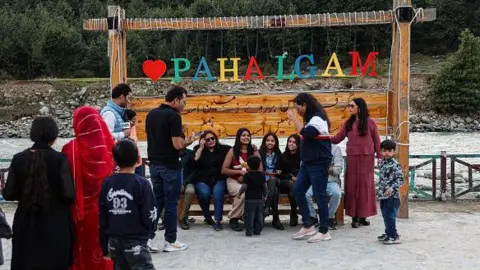
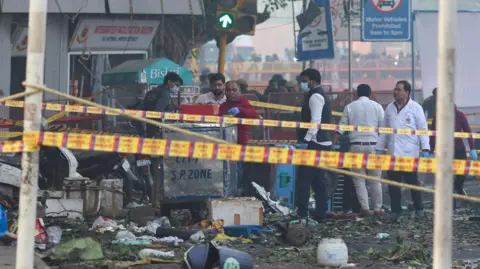
Aishanya's husband, Shubham Dwivedi, was among 26 people killed on 22 April 2025, when militants opened fire on tourists near the town of Pahalgam - one of the deadliest attacks on civilians in Kashmir in decades. The region is claimed in full by both India and Pakistan but administered in parts by each, and has been the cause of wars between them.
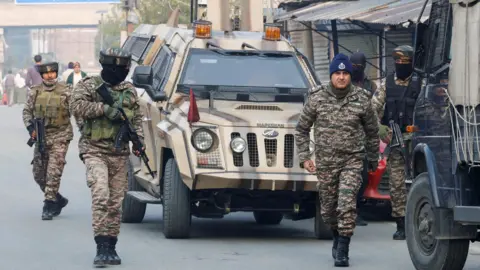
Delhi blamed Pakistan for the attack, alleging the killings were carried out by a group based in the country, a charge Islamabad denied. In response, India launched air strikes at what it asserted were militant bases, leading to intense conflict over the following days until a ceasefire was announced.
This incident sparked national outrage, particularly as many victims were young Hindu men embarking on new phases of life. The consequences of the attack linger heavily, felt most in the quiet spaces of homes where grief has transformed but not diminished.
Aishanya recalls how the couple enjoyed their honeymoon, only for their lives to be forever altered in an instant. Since that day, memories of her husband have become both a refuge and a burden.
I did not get enough time to make a lot of memories, she reflects. Yet, Shubham gave me so many memories to live with.
Her phone displays treasured images of Shubham, and she plays videos, holding on to their shared moments. In contrast, the family of another victim, Vinay Narwal, has remained largely silent; they keep his belongings untouched, unable to mention his name or show his photo.
As families navigate their grief differently, both underscore the everlasting impact of that fateful day, echoing their resolve to preserve the memories of their loved ones while charting paths forward in their lives.
I once asked him why there was no mirror there, she said. The next day, he got one.
Aishanya's husband, Shubham Dwivedi, was among 26 people killed on 22 April 2025, when militants opened fire on tourists near the town of Pahalgam - one of the deadliest attacks on civilians in Kashmir in decades. The region is claimed in full by both India and Pakistan but administered in parts by each, and has been the cause of wars between them.
Delhi blamed Pakistan for the attack, alleging the killings were carried out by a group based in the country, a charge Islamabad denied. In response, India launched air strikes at what it asserted were militant bases, leading to intense conflict over the following days until a ceasefire was announced.
This incident sparked national outrage, particularly as many victims were young Hindu men embarking on new phases of life. The consequences of the attack linger heavily, felt most in the quiet spaces of homes where grief has transformed but not diminished.
Aishanya recalls how the couple enjoyed their honeymoon, only for their lives to be forever altered in an instant. Since that day, memories of her husband have become both a refuge and a burden.
I did not get enough time to make a lot of memories, she reflects. Yet, Shubham gave me so many memories to live with.
Her phone displays treasured images of Shubham, and she plays videos, holding on to their shared moments. In contrast, the family of another victim, Vinay Narwal, has remained largely silent; they keep his belongings untouched, unable to mention his name or show his photo.
As families navigate their grief differently, both underscore the everlasting impact of that fateful day, echoing their resolve to preserve the memories of their loved ones while charting paths forward in their lives.