
In brief
Prime Minister Shehbaz Sharif of Pakistan and Crown Prince Mohammed bin Salman of Saudi Arabia recently signed a strategic mutual defence pact, which many in India perceive as a direct threat to its national security. Analysts highlight the pact's provision for mutual response to aggression, raise concerns regarding Pakistan's military reliance on Saudi Arabia, and its implications for India's diplomatic relations in the region. While some experts argue that the deal may not pose an immediate threat, it signifies a shift in regional alliances and could impact India's strategic calculations moving forward.
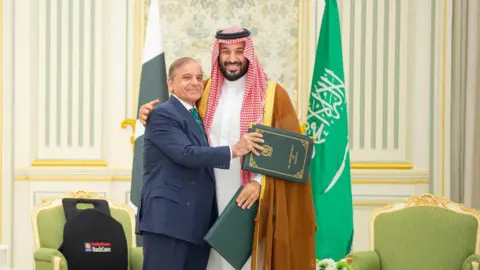
When Shehbaz Sharif, Pakistan's prime minister, clasped Saudi Crown Prince Mohammed bin Salman in Riyadh last week, the symbolism was unmistakable.
The embrace followed the signing of a strategic mutual defence agreement, bringing the Islamic world's only nuclear-armed state closer to the Gulf's most ambitious monarchy.
A senior Saudi official told Reuters that the pact was merely an institutionalisation of long-standing and deep cooperation. But many in India see it differently.
Despite Delhi's cultivated warmth with Riyadh, the pact lands amid heightened hostility with Pakistan, including a four-day conflict earlier this year. Nuclear-armed neighbours India and Pakistan have fought multiple wars and clashes over Kashmir, making any move by Saudi to underwrite Pakistan's military a direct concern.
What unsettles Indian analysts the most is the pact's commitment that any aggression against either country shall be considered an aggression against both.
Riyadh knew India would construe the Saudi-Pakistan pact as a direct threat to its security, yet it went ahead, Brahma Chellaney, an Indian strategist, posted on X.
Former Indian foreign secretary Kanwal Sibal called the pact a grave misstep by Saudi Arabia, warning that this could have serious implications for India's national security.
India's Narendra Modi-led government has been more circumspect, with a foreign ministry spokesman noting that the government will study its [the pact's] implications for national security and regional and global stability. India's diplomatic nuances are expected to be heavily impacted as Delhi watches the developments closely.
In summary, while some experts believe Riyadh's ties with India won't suffer drastically, the pact signifies a nuanced shift in the regional balance of power, compelling India to reassess its strategy in the context of Pakistan's strengthening ties with Saudi Arabia.
