When one side, the US, claims that there are ongoing, productive negotiations to end the war, while Iran firmly states otherwise, it raises questions of credibility. What truly lies behind the scenes? Is peace in the Gulf imminent, or are both sides entrenched in a costly and prolonged conflict that will keep fuel prices elevated globally this summer?
Indirect communications between the US and Iran are taking place, primarily via intermediaries like Pakistan that maintain amicable relations with both nations. However, such channels of communication should not be confused with actual negotiations, which is likely why an Iranian military spokesperson has categorically dismissed the idea of negotiations being underway.
The situation mirrors the stalemate seen in the Russia-Ukraine conflict, where both parties express a desire to conclude hostilities, yet their terms diverge significantly, creating further obstruction.
What the US and Israel Want
As hostilities erupted on February 28, there were high expectations in Washington and Jerusalem that the superior military capabilities of the US and Israel would lead to the downfall of the Iranian regime. The hope was that, if this did not happen, Iran would be economically crippled and would have to seek peace on American terms.
This scenario has not unfolded, and the US along with Israel may face challenges in achieving their objectives, as Iran's resilience appears to be strengthening.
A proposed 15-point plan by the US, as reported by Israel's Channel 12, includes demands for the cessation of Iran's nuclear activities, its ballistic missile program, and its support for proxy militias such as Hezbollah and the Houthis. In exchange, Iran would receive sanctions relief and potential shared control over the strategically vital Strait of Hormuz.
What Iran Wants
Iran has famously rejected the US plan, deeming it excessive. While its Foreign Minister, Abbas Araghchi, mentioned that some ideas were under discussion, their state media outlined five conditions for terminating the war. These include demands for reparations, international acknowledgment of its authority over the Strait of Hormuz, and assurances against further military aggression.
As the largest population and land area in the Gulf, Iran seeks to reclaim its role as the region's dominant power, a status it enjoyed prior to the Islamic Revolution in 1979. To realize this, Iran desires the withdrawal of the US Navy's 5th Fleet from the region, allowing it to consolidate its power, with support anticipated from nations such as Russia and China.
However, Iran's trust in the US remains significantly compromised due to past experiences where negotiations collapsed and military actions ensued. Critics assert that Iran's intentions may be to string the conversations along while retaining its controversial military programs.
What the Gulf Arab States Want
The Gulf Arab nations are discontented with the present situation, having previously established a delicate rapport with the Iranian regime. They are apprehensive as the US's attempts to dismantle the Iranian regime have met with failure, leaving the regime less stable yet more aggressive, targeting neighboring states with drone and missile strikes.
In light of Iran's improved strategic posture, particularly regarding control over the Strait of Hormuz—a critical maritime route for global commerce—these states prefer a return to the previous equilibrium but recognize that this may now be unattainable.
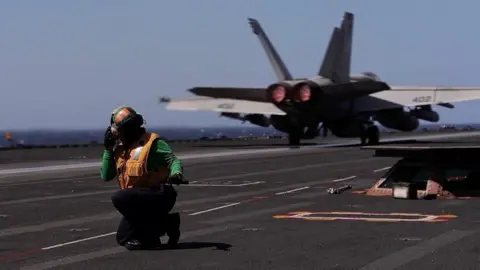
On the US side, the arrival of approximately 5,000 Marines and paratroopers may expand options; however, these moves carry inherent risks. Deployments could aim to put pressure on Tehran, yet any ground operations risk escalating casualties, which are politically sensitive in the US, especially when the conflict is labeled a 'war of choice.'
With the Iranian regime's longevity, its demands are becoming bolder, as it perceives both strategic and temporal advantages in negotiations, complicating any hope for reconciliation with US diplomats.