America may be a nation at war, but President Donald Trump's activities over the past few days have been a mix of diplomacy and diversions - with the occasional swing towards the surreal.
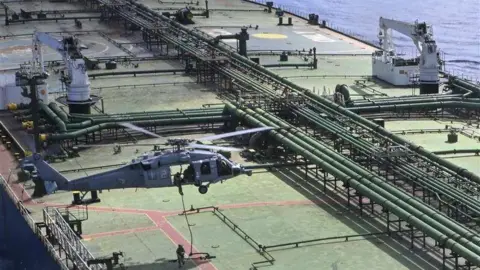
On Friday, he claimed the US war against Iran was winding down. However, by Saturday night, Trump issued a 48-hour deadline to Iran to reopen the Strait of Hormuz or face renewed airstrikes. The next day, he golfed and spent the afternoon at his Mar-a-Lago resort in Florida.
By Monday morning, as global markets tumbled, he announced that constructive talks were underway with Iranian leaders. Later that day, Trump traveled to Memphis, Tennessee, where he not only addressed the public but also visited the historic home of Elvis Presley, Graceland.
As US and Israeli airstrikes on Iranian targets continued, Iran responded aggressively, threatening to target regional infrastructure in retaliation. Trump's ultimatum signaled serious consequences if Iran failed to comply. Interestingly, after backing off from immediate strikes, he cited an unnamed Iranian leader's willingness to engage as a reason to pause military actions.
During his travels, Trump sought to maintain an optimistic stance, proclaiming that the US and Iran had significant points of agreement, and suggested that both nations desired a deal. However, following his Graceland visit, the White House indicated a new countdown for potential airstrikes on Iran's power infrastructure.
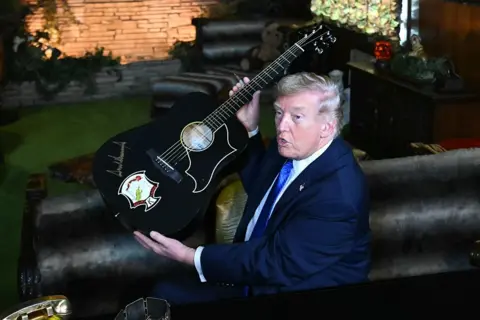
Trump's tour of Graceland included signing memorabilia and conversing about his admiration for Elvis, even as diplomatic conversations loomed in the background. Despite contrasting statements from Iranian officials about the talks, the stock market reacted positively to the hopeful atmosphere surrounding a potential resolution to the conflict.
Whether this marks a genuine diplomatic breakthrough or simply a tactical pause remains to be seen. As the situation evolves, one thing is clear: the pressure on Trump to navigate these turbulent waters is immense.
On Friday, he claimed the US war against Iran was winding down. However, by Saturday night, Trump issued a 48-hour deadline to Iran to reopen the Strait of Hormuz or face renewed airstrikes. The next day, he golfed and spent the afternoon at his Mar-a-Lago resort in Florida.
By Monday morning, as global markets tumbled, he announced that constructive talks were underway with Iranian leaders. Later that day, Trump traveled to Memphis, Tennessee, where he not only addressed the public but also visited the historic home of Elvis Presley, Graceland.
As US and Israeli airstrikes on Iranian targets continued, Iran responded aggressively, threatening to target regional infrastructure in retaliation. Trump's ultimatum signaled serious consequences if Iran failed to comply. Interestingly, after backing off from immediate strikes, he cited an unnamed Iranian leader's willingness to engage as a reason to pause military actions.
During his travels, Trump sought to maintain an optimistic stance, proclaiming that the US and Iran had significant points of agreement, and suggested that both nations desired a deal. However, following his Graceland visit, the White House indicated a new countdown for potential airstrikes on Iran's power infrastructure.
Trump's tour of Graceland included signing memorabilia and conversing about his admiration for Elvis, even as diplomatic conversations loomed in the background. Despite contrasting statements from Iranian officials about the talks, the stock market reacted positively to the hopeful atmosphere surrounding a potential resolution to the conflict.
Whether this marks a genuine diplomatic breakthrough or simply a tactical pause remains to be seen. As the situation evolves, one thing is clear: the pressure on Trump to navigate these turbulent waters is immense.