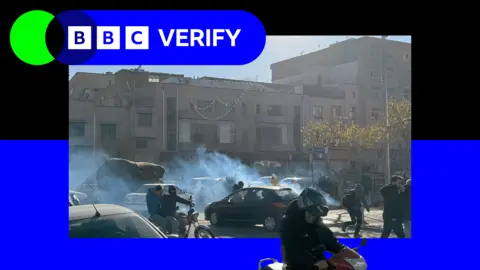
Protests have broken out in at least 17 of Iran's 31 provinces, presenting the largest challenge to the country's clerical establishment since 2022, a BBC Verify and BBC Persian analysis has found.
The BBC's analysis of protests includes only those for which we have verified video footage - the true number is almost certainly far higher. There are reports of protests in a further 11 provinces.
The wave of protests has spread rapidly across Iran since 28 December, when anger initially broke out in the capital Tehran following a fresh and sharp devaluation of the country's currency against the dollar and other major foreign currencies.
Verified footage from the last 10 days shows evidence of anti-government demonstrations and gatherings in more than 50 towns and cities across the country, including in several regions previously perceived as being highly loyal to the state.
More than 100 videos which we geolocated and checked for publication date paint a picture of the scale of the unrest, with people taking to the streets in many major cities in Iran and presenting the largest challenge to the state since the Women, Life and Freedom protests in 2022.
Footage has also shown protests in Qom in central Iran and Mashhad in the north-east, both of which have traditionally hosted populations extremely loyal to the Islamic Republic.
Prof Sina Azodi, Director of Middle East Studies Program at George Washington University, said that unrest in those cities was very telling and amounted to evidence that the government's base of support is also suffering under the economic hardship.
Authorities have traditionally used violence to crush unrest. During the 2022 protests - sparked by the death in custody of Mahsa Amini, a young woman who had been detained in Tehran for wearing improper hijab - more than 550 people were allegedly killed by security forces, according to human rights groups.
While the latest response by police and security forces initially appeared to be more restrained, verified footage has shown officers ramping up the use of force since Saturday. This change in approach coincided with Supreme Leader Ayatollah Ali Khamenei's first public reaction to the protests on that day, in which he said that rioters must be put in their place.
Since the supreme leader's remarks, Iran's judiciary chief has claimed they would listen to protesters and critics who legitimately and rightly have concerns about their livelihood and social and economic welfare. However, he also warned that they would deal firmly with those who seek to exploit the situation, incite riots, and undermine the security of the country and the people.
BBC Persian has so far confirmed the identities of at least 11 people reported dead since 28 December using established methods.
Experts warn that the heavy-handed responses by the security forces could only exacerbate the challenges facing the Iranian government, potentially leading to deeper economic disparities and rising public discontent.