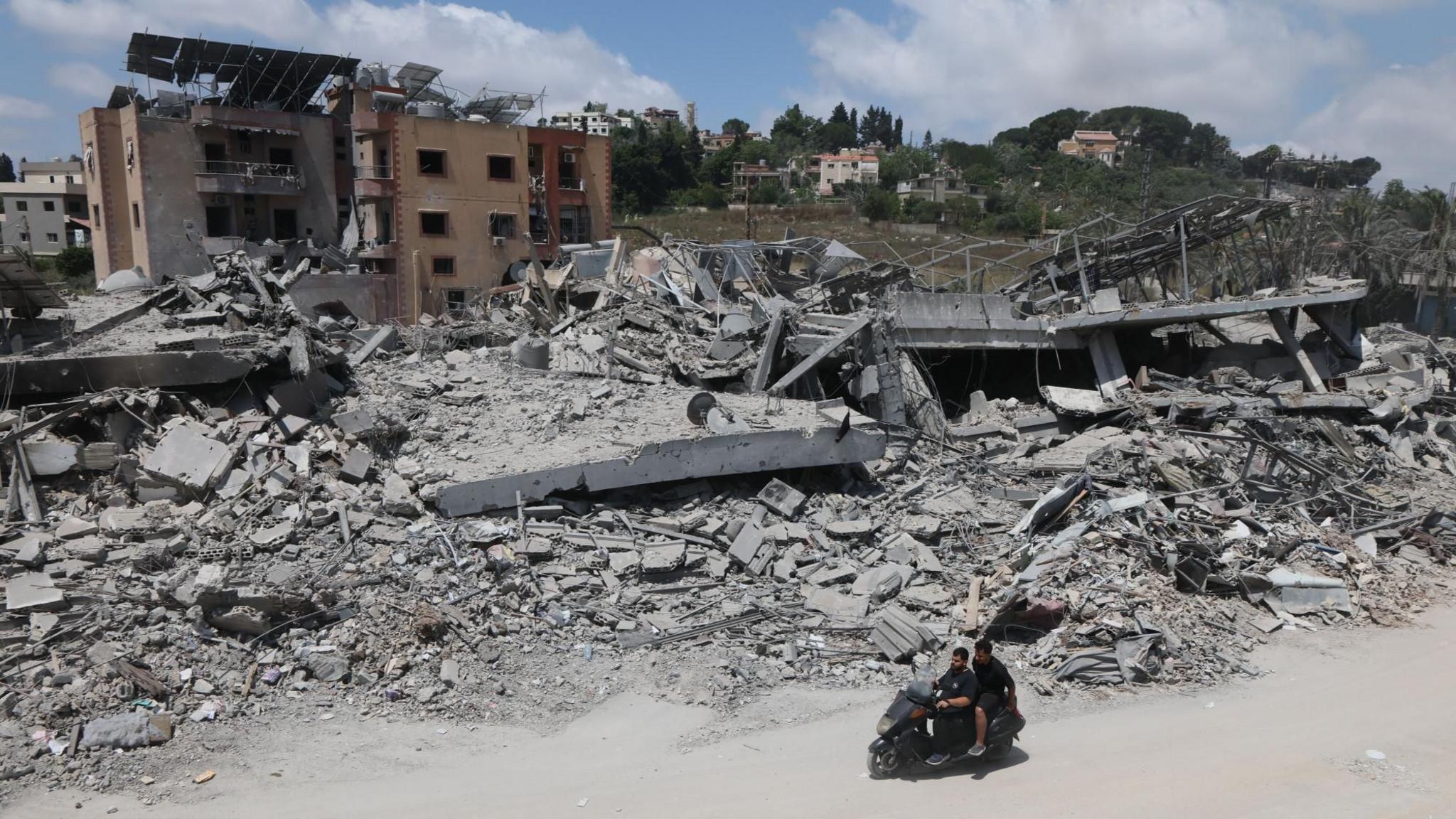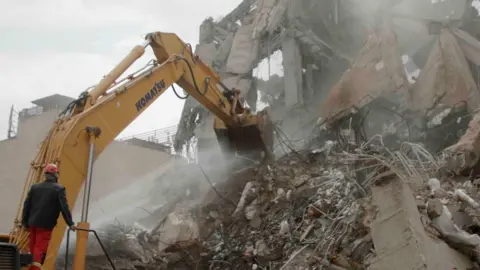
A mother stands by the rubble, crying out for her daughter. For days, she has been waiting for rescue workers to dig through the flattened remains of what was once her daughter's flat in Resalat, a residential district in eastern Tehran. They don't have the manpower to get her out, the woman laments. My daughter is under the rubble... she's afraid of the dark.
For a month now, Iran has been embroiled in war with the United States and Israel, which have conducted repeated air strikes across the country targeting regime-related sites. The collateral damage is staggering, particularly for civilians caught in the crossfire. Residents report being trapped between relentless bombardment and a government that has responded to anti-establishment protests with severe crackdowns in January.
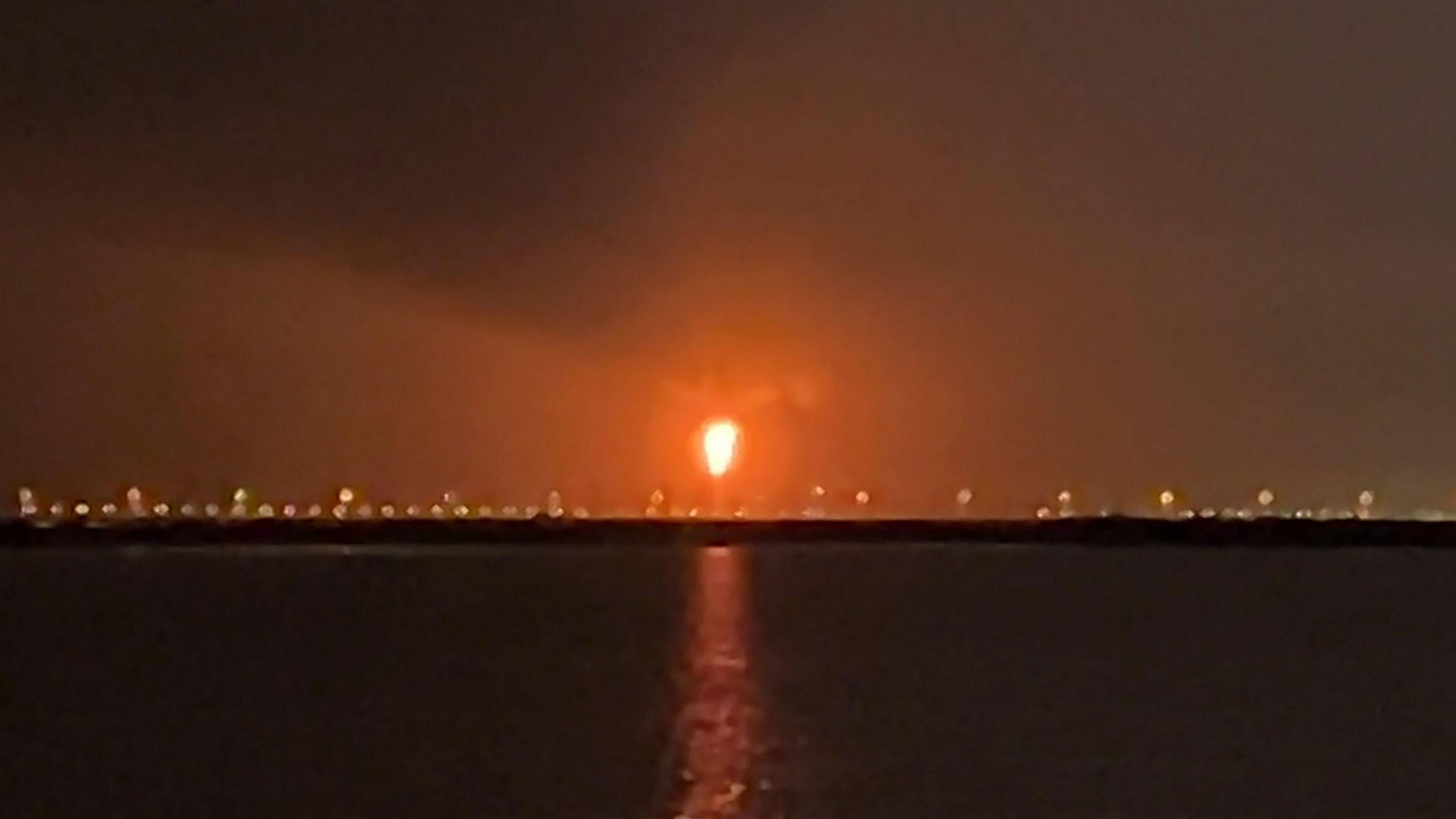
BBC Eye has obtained exclusive footage from independent journalists inside Tehran, revealing the impact of attacks on state-linked targets embedded within civilian neighborhoods. Eyewitness accounts and social media footage illustrate catastrophic consequences, with many civilian buildings heavily damaged or destroyed.
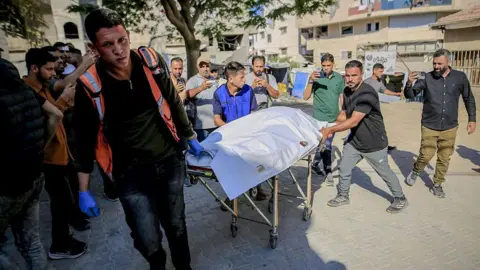
The destruction is exemplified by the recent air strike on a multi-story apartment building in Resalat, where families lost everything. Local authorities estimate that between 40 and 50 civilians were killed in this unilateral attack. Survivors now face displacement and uncertainty, seeking refuge in nearby hotels without any substantial support from local authorities.
As the Israel Defense Forces justifies its operations by citing military targets, analysis indicates that the damage extends far beyond targeted sites, demonstrating a blatant disregard for civilian life. International humanitarian law mandates the principle of proportionality, raising critical concerns regarding the legality of such strikes in densely populated areas.
With ongoing assaults, reports from the Human Rights Activists News Agency indicate that approximately 1,464 civilians, including 217 children, have died since the conflict's inception. As pressures mount on the Iranian regime and the populace, many express growing resentment toward the authorities for inadequate support and safety provisions in these perilous times.
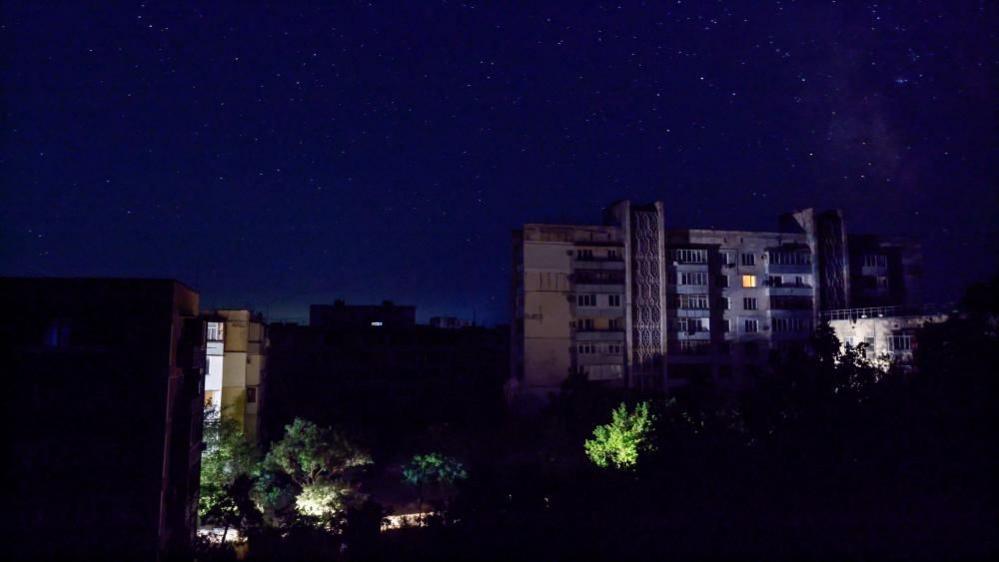
In a city where infrastructure is intermingled with homes, shops, and schools, the human cost of military objectives grows immensely. For many in Tehran, the fear of the unknown becomes a daily reality, measured in lost lives, damaged homes, and a feeling of total exposure to the dangers overhead.
For a month now, Iran has been embroiled in war with the United States and Israel, which have conducted repeated air strikes across the country targeting regime-related sites. The collateral damage is staggering, particularly for civilians caught in the crossfire. Residents report being trapped between relentless bombardment and a government that has responded to anti-establishment protests with severe crackdowns in January.
BBC Eye has obtained exclusive footage from independent journalists inside Tehran, revealing the impact of attacks on state-linked targets embedded within civilian neighborhoods. Eyewitness accounts and social media footage illustrate catastrophic consequences, with many civilian buildings heavily damaged or destroyed.
The destruction is exemplified by the recent air strike on a multi-story apartment building in Resalat, where families lost everything. Local authorities estimate that between 40 and 50 civilians were killed in this unilateral attack. Survivors now face displacement and uncertainty, seeking refuge in nearby hotels without any substantial support from local authorities.
As the Israel Defense Forces justifies its operations by citing military targets, analysis indicates that the damage extends far beyond targeted sites, demonstrating a blatant disregard for civilian life. International humanitarian law mandates the principle of proportionality, raising critical concerns regarding the legality of such strikes in densely populated areas.
With ongoing assaults, reports from the Human Rights Activists News Agency indicate that approximately 1,464 civilians, including 217 children, have died since the conflict's inception. As pressures mount on the Iranian regime and the populace, many express growing resentment toward the authorities for inadequate support and safety provisions in these perilous times.
In a city where infrastructure is intermingled with homes, shops, and schools, the human cost of military objectives grows immensely. For many in Tehran, the fear of the unknown becomes a daily reality, measured in lost lives, damaged homes, and a feeling of total exposure to the dangers overhead.