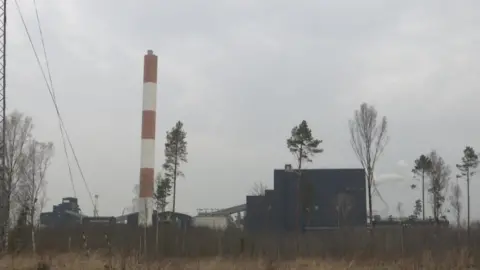
Ukrainian drones entered Estonian and Latvian air spaces from Russia overnight, with one hitting infrastructure and another crashing on land, according to officials from Tallinn and Riga. One drone struck the chimney of a power plant in Auvere, Estonia, while another exploded in the southern Kraslava region of Latvia. Fortunately, no major damage or injuries were reported.
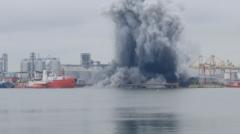
The incidents occurred simultaneously as Ukraine launched a significant drone attack on the Russian port of Ust-Luga, located approximately 25 kilometers (15 miles) from the Estonian border. Estonian Prime Minister Kristen Michal stated that Ust-Luga was targeted in three waves between 03:00 and 08:00 local time. In response to the drone activity, Baltic air patrols were mobilized, and notifications were sent to Estonian phones warning of the drone threat.
Margo Palloson, head of Estonia's security police, indicated that it was a Ukrainian drone that deviated from its course, possibly influenced by events in Russian airspace. Latvian Prime Minister Edgars Rinkevics confirmed that the drone which affected Latvia was also of Ukrainian origin.
In light of the incident, Latvia's Defence Minister Andris Spruds hastily returned from a visit in Ukraine. Egils Lescinskis, a deputy chief of the Latvian Joint Staff, suggested that electromagnetic warfare might have caused the drone’s misdirection. Drones can often miss their intended targets when GPS signals are interfered with.
Local residents were advised that it is challenging to ensure complete safety amidst ongoing military activities in nearby regions. Additionally, Palloson warned that such incidents could become more frequent, while Michal urged against the illusion of creating an impermeable border with Russia.
Following a similar incident in Lithuania, where a Ukrainian drone also veered off course near the Belarusian border, Lithuanian authorities confirmed the drone had been launched as part of their operations against Russia.
Recent military actions saw Ukraine target several Russian ports and energy sites, including a massive drone offensive that saw nearly 400 drones launched at Russian territory, coinciding with Russia's largest attack on Ukraine in a 24-hour span, involving 948 drones.
The incidents occurred simultaneously as Ukraine launched a significant drone attack on the Russian port of Ust-Luga, located approximately 25 kilometers (15 miles) from the Estonian border. Estonian Prime Minister Kristen Michal stated that Ust-Luga was targeted in three waves between 03:00 and 08:00 local time. In response to the drone activity, Baltic air patrols were mobilized, and notifications were sent to Estonian phones warning of the drone threat.
Margo Palloson, head of Estonia's security police, indicated that it was a Ukrainian drone that deviated from its course, possibly influenced by events in Russian airspace. Latvian Prime Minister Edgars Rinkevics confirmed that the drone which affected Latvia was also of Ukrainian origin.
In light of the incident, Latvia's Defence Minister Andris Spruds hastily returned from a visit in Ukraine. Egils Lescinskis, a deputy chief of the Latvian Joint Staff, suggested that electromagnetic warfare might have caused the drone’s misdirection. Drones can often miss their intended targets when GPS signals are interfered with.
Local residents were advised that it is challenging to ensure complete safety amidst ongoing military activities in nearby regions. Additionally, Palloson warned that such incidents could become more frequent, while Michal urged against the illusion of creating an impermeable border with Russia.
Following a similar incident in Lithuania, where a Ukrainian drone also veered off course near the Belarusian border, Lithuanian authorities confirmed the drone had been launched as part of their operations against Russia.
Recent military actions saw Ukraine target several Russian ports and energy sites, including a massive drone offensive that saw nearly 400 drones launched at Russian territory, coinciding with Russia's largest attack on Ukraine in a 24-hour span, involving 948 drones.