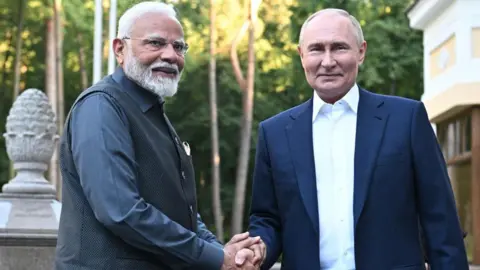
Russian President Vladimir Putin is starting a two-day visit to India, where he will meet Prime Minister Narendra Modi and attend an annual summit held by both countries.
Delhi and Moscow are expected to sign a number of deals during the visit, which comes months after the US increased pressure on India to stop buying Russian oil. It also coincides with ongoing diplomatic efforts by the US to engage with Russia and Ukraine to resolve the conflict.
India and Russia have been close allies for decades, and the warm relationship between Putin and Modi forms the cornerstone of their discussions. This visit is significant for both leaders as they navigate the complexities of global geopolitics and the ongoing war in Ukraine.
A Special Friendship, Trade Deals, and Geopolitics
India's population of nearly 1.5 billion and its status as the world's fastest-growing major economy make it an attractive market for Russia's exports, particularly oil. Before the Ukraine war, only 2.5% of India's oil imports were from Russia, but this surged to 35% as India capitalized on discounted prices amid sanctions against Moscow.
However, US sanctions on Russian oil have complicated this relationship. In October, the Trump administration imposed a 25% tariff on Indian goods, citing that India's oil purchases indirectly funded Russia's military actions. Currently, India is under pressure to balance its oil purchases from Russia with its economic relationship with the US.
Weapons sales have historically been another vital area of cooperation, with reports indicating India’s plans to purchase advanced Russian fighter jets and defense systems. Economic isolation stemming from international sanctions has also driven Russia to seek trained professionals from India to alleviate workforce shortages.
Geopolitically, Russia seeks to reinforce its ties with India to demonstrate that Western attempts to isolate it following the Ukraine invasion have failed. A summit with Modi allows Putin to showcase their alliance while simultaneously mending relations with countries in the Global South.
Test of Modi's Strategic Autonomy
Putin's visit to Delhi comes at an intricate juncture for Modi, amid rising pressure from the West to condemn Russia's actions in Ukraine while maintaining India's independence in foreign policy—referred to as 'strategic autonomy.' India has historically maintained close ties with Russia, but Modi faces new challenges following deteriorating relations with Washington.
Modi's balancing act involves reaffirming close ties with Russia while keeping Western partnerships intact. This visit is pivotal for preparing the ground for future collaboration, not just in oil and defense but also in trade, where India currently faces imbalanced exports to Russia.
Furthermore, analysts highlight that expanding bilateral trade—now influenced heavily by discounted oil purchases—is essential for reducing the trade deficit and enhancing India's presence in Russian markets.
As India prepares to return to the global marketplace post-sanctions, Modi aims to leverage this relationship with Russia for greater economic cooperation that won't compromise India's ties with Western powers.
Ultimately, Putin's visit serves as more than a diplomatic gesture; it's an opportunity to negotiate new terms based on mutual interests while addressing the challenges posed by changing global dynamics.