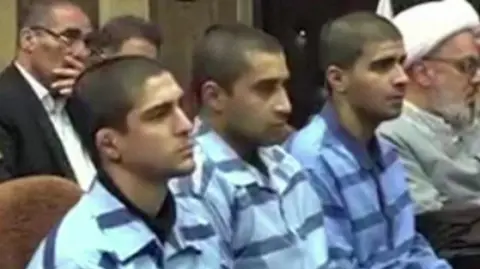
Iran has executed three men accused of killing police officers during anti-government protests in January, marking the first hangings linked to the unrest, according to state media reports. Among those executed was teenager Saleh Mohammadi, who was a member of Iran's national wrestling team. These executions occurred in the northern Qom province after the Supreme Court upheld their death sentences.
The protests, which surged in response to economic hardships like the collapse of the Iranian currency, saw significant violence from authorities, resulting in numerous casualties. Human rights organizations estimate that approximately 7,000 people were killed during the crackdown, including nearly 250 children.
Iran's Tasnim news agency reported that Mohammadi, along with Mehdi Ghasemi and Saeed Davoudi, was convicted of killing two police officers and charged with 'moharebeh' (waging war against God), a capital offense used by the Iranian regime against dissenters. Critics have claimed the men confessed under torture and were deprived of a fair trial.
These military responses to dissent have drawn condemnation from the international community, with calls for justice gaining momentum as the situation in Iran escalates. The executions followed a violent crackdown on protests that spread to 180 cities and towns throughout the country, reflecting deep-seated anger towards the clerical establishment since the Islamic revolution in 1979.
The legal processes preceding the executions are highly contested, with both national and international observers questioning their validity. The Iranian judiciary has been accused of conducting proceedings that lack fairness, especially in politically charged cases involving accusations against the state.
The ongoing unrest and the government's harsh responses, including internet blackouts, have made reporting on the situation increasingly difficult. Yet, witnesses have described the violent crackdown as unprecedented, raising alarms about human rights abuses in the region.
The protests, which surged in response to economic hardships like the collapse of the Iranian currency, saw significant violence from authorities, resulting in numerous casualties. Human rights organizations estimate that approximately 7,000 people were killed during the crackdown, including nearly 250 children.
Iran's Tasnim news agency reported that Mohammadi, along with Mehdi Ghasemi and Saeed Davoudi, was convicted of killing two police officers and charged with 'moharebeh' (waging war against God), a capital offense used by the Iranian regime against dissenters. Critics have claimed the men confessed under torture and were deprived of a fair trial.
These military responses to dissent have drawn condemnation from the international community, with calls for justice gaining momentum as the situation in Iran escalates. The executions followed a violent crackdown on protests that spread to 180 cities and towns throughout the country, reflecting deep-seated anger towards the clerical establishment since the Islamic revolution in 1979.
The legal processes preceding the executions are highly contested, with both national and international observers questioning their validity. The Iranian judiciary has been accused of conducting proceedings that lack fairness, especially in politically charged cases involving accusations against the state.
The ongoing unrest and the government's harsh responses, including internet blackouts, have made reporting on the situation increasingly difficult. Yet, witnesses have described the violent crackdown as unprecedented, raising alarms about human rights abuses in the region.