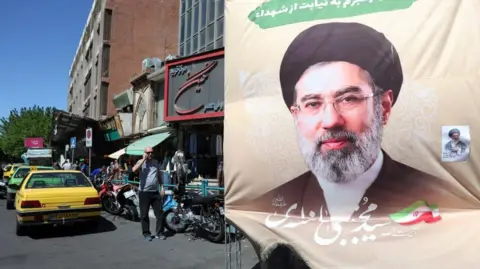
The question hanging over Tehran since the opening strikes of Iran's current war with the US and Israel is simple: Who is in charge? Formally, the answer is clear. Mojtaba Khamenei has assumed the role of supreme leader following the killing of his father, Ali Khamenei, on the first day of the war on February 28. In the Islamic Republic's system, that position is meant to be decisive. The leader has the final word on almost anything important: war, peace, and the state's strategic direction.
But in practice, the picture is far murkier. Donald Trump has described Iran's leadership as 'fractured' and suggested the US is waiting for Tehran to produce a 'unified proposal'. Unity was certainly on the minds of Iran's leaders when they distributed a message to Iranians on their mobile phones saying there was 'no such thing as a hardliner or moderate in Iran - there was just one nation, one course'.
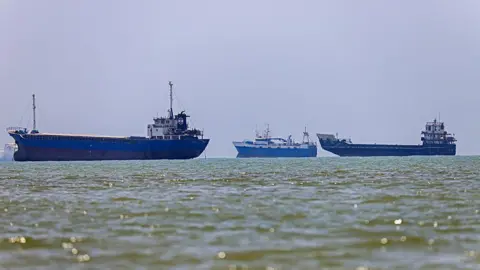
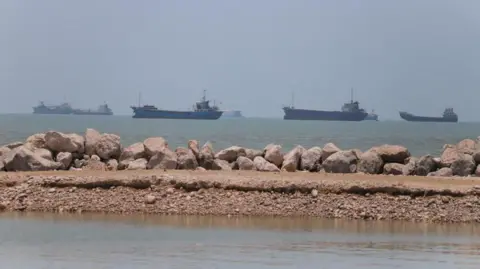
Mojtaba Khamenei has not been seen in public since taking power. Beyond a handful of written statements, including one insisting the Strait of Hormuz remains closed, there is little direct evidence of his day-to-day control. Iranian officials have acknowledged that he was injured in the initial strikes but have offered few details. Reports indicate he may have suffered facial injuries that have impacted his ability to speak.
This absence matters as authority in Iran’s political system not only resides in institutional roles but also relies on the performative actions of its leaders. The late Khamenei's public appearances and speeches demonstrated intent and control, a dynamic currently lacking.
Despite a formalized leadership structure, the current function of Iran’s governing bodies shows a system that is functional but not coherently directed. The supreme leader’s authority exists but is not visibly exercised; diplomacy is active but not decisive, and figures like Mohammad-Bagher Ghalibaf, speaker of parliament, are stepping forward but without clear legitimacy.
As Iran faces significant pressure from external conflicts, it raises the question of whether the system can effectively signal a unified strategy or if its actions will remain behind closed doors, lacking public acknowledgment and coordination.
But in practice, the picture is far murkier. Donald Trump has described Iran's leadership as 'fractured' and suggested the US is waiting for Tehran to produce a 'unified proposal'. Unity was certainly on the minds of Iran's leaders when they distributed a message to Iranians on their mobile phones saying there was 'no such thing as a hardliner or moderate in Iran - there was just one nation, one course'.
Mojtaba Khamenei has not been seen in public since taking power. Beyond a handful of written statements, including one insisting the Strait of Hormuz remains closed, there is little direct evidence of his day-to-day control. Iranian officials have acknowledged that he was injured in the initial strikes but have offered few details. Reports indicate he may have suffered facial injuries that have impacted his ability to speak.
This absence matters as authority in Iran’s political system not only resides in institutional roles but also relies on the performative actions of its leaders. The late Khamenei's public appearances and speeches demonstrated intent and control, a dynamic currently lacking.
Despite a formalized leadership structure, the current function of Iran’s governing bodies shows a system that is functional but not coherently directed. The supreme leader’s authority exists but is not visibly exercised; diplomacy is active but not decisive, and figures like Mohammad-Bagher Ghalibaf, speaker of parliament, are stepping forward but without clear legitimacy.
As Iran faces significant pressure from external conflicts, it raises the question of whether the system can effectively signal a unified strategy or if its actions will remain behind closed doors, lacking public acknowledgment and coordination.