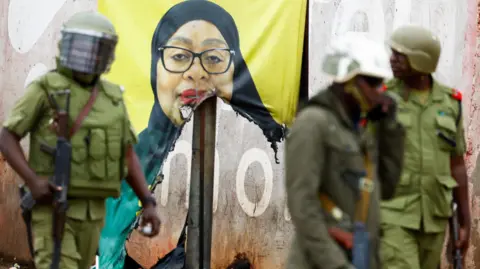
A total of 518 people died in Tanzania from unnatural causes, including 197 who were shot dead, after widespread protests that erupted following last year's general election. The inquiry, led by commission chairman Mohamed Chande Othman, did not assign blame for the fatalities but called for further investigations. This announcement marks the first official acknowledgment of the death toll following the unrest.
Opposition parties and human rights organizations have accused security forces of a violent crackdown on demonstrators, with some claiming thousands were killed. In contrast, the government declared President Samia Suluhu Hassan the winner of the elections with 98% of the vote, a claim opposition leaders have dismissed as a mockery of democracy, noting that key challengers were barred from participating.
International observers had previously voiced concerns about the election's transparency, further complicating the national narrative as video evidence surfaced showing police firing on protestors.
In reaction to the report, President Hassan asserted that the violence had shook our nation and promised to implement lessons learned. She maintained that the chaos resulted from coordinated efforts to instigate a political crisis, asserting that those responsible for inciting violence would face justice.
The commission's findings outlined that of the reported deaths, 490 were male, 21 were children, and 16 were security officers, with the actual number potentially higher due to unreported fatalities. Additionally, over 2,000 individuals suffered injuries amid the unrest, sparking outrage over the government's response to a previously stable political climate in Tanzania.
Recommendations from the commission included providing medical treatment for victims and establishing a national day of mourning for those who died during the turmoil. Calls for a new national reconciliation commission and a new constitution by 2028 have also emerged from this investigation, reflecting a country grappling with its political identity and authority.
Opposition parties and human rights organizations have accused security forces of a violent crackdown on demonstrators, with some claiming thousands were killed. In contrast, the government declared President Samia Suluhu Hassan the winner of the elections with 98% of the vote, a claim opposition leaders have dismissed as a mockery of democracy, noting that key challengers were barred from participating.
International observers had previously voiced concerns about the election's transparency, further complicating the national narrative as video evidence surfaced showing police firing on protestors.
In reaction to the report, President Hassan asserted that the violence had shook our nation and promised to implement lessons learned. She maintained that the chaos resulted from coordinated efforts to instigate a political crisis, asserting that those responsible for inciting violence would face justice.
The commission's findings outlined that of the reported deaths, 490 were male, 21 were children, and 16 were security officers, with the actual number potentially higher due to unreported fatalities. Additionally, over 2,000 individuals suffered injuries amid the unrest, sparking outrage over the government's response to a previously stable political climate in Tanzania.
Recommendations from the commission included providing medical treatment for victims and establishing a national day of mourning for those who died during the turmoil. Calls for a new national reconciliation commission and a new constitution by 2028 have also emerged from this investigation, reflecting a country grappling with its political identity and authority.