Iran's rulers are confronting their most serious challenge since their own 1979 revolution.
They're now countering on an unprecedented scale - a ferocious security crackdown and near-total internet shutdown has been unleashed on a scale unseen in previous crises.
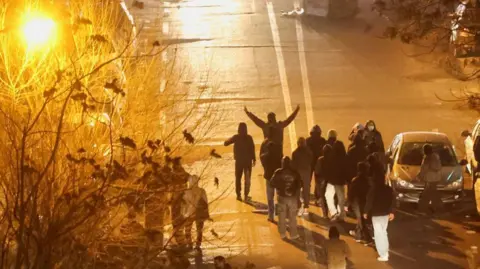
Some of the streets once engulfed by a roar of anger against the regime are now starting to go silent.
Officials and citizens are speaking on the record about a furious internal upheaval, compounded by an external threat. President Trump's repeated warnings of military action come after the US carried out strikes on key nuclear facilities during a recent conflict, further weakening the regime.
"On Friday it was extremely crowded - the crowd was unbelievable - and there was a lot of shooting. Then Saturday night it became much, much quieter," a resident of Tehran told BBC Persian.
The response from the regime has been harsh, declaring total control amidst parallel reports of governmental retaliation against citizens. The death toll is expected to rise, as international observers express concern over escalating violence and the internal dynamics of unrest.
Despite efforts at dialogue, including a promise from President Masoud Pezeshkian to address 'legitimate demands', the public's frustration with soaring inflation and corruption has spiraled into demands for systemic change.
As the government attempts to navigate this dire situation, experts question whether the aging leadership can maintain power amidst relentless public dissent. Observers—including Vali Nasr from Johns Hopkins University—propose that as pressure mounts, leaders may opt for increased repression to secure their rule.
The international community continues to monitor the situation closely as protests across Iran's cities underscore a population no longer willing to tolerate their conditions.