Trade tensions and a reversal in the artificial intelligence (AI) boom are among the main risks to global economic growth, the International Monetary Fund (IMF) has warned.
Its comments came in its latest world economic outlook, where it described the global economy as steady, with growth expected to remain resilient this year.
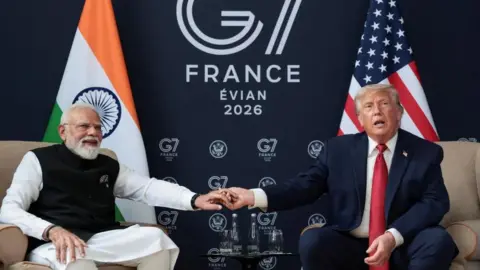
The IMF's forecast was produced ahead of Donald Trump's threat at the weekend to impose tariffs on eight European countries opposed to his proposed takeover of Greenland.
The fund also said the independence of central banks was paramount for global economic stability and growth.
The IMF projected global growth to reach 3.3% this year, an increase from its earlier forecast of 3.1%, before slowing slightly to 3.2% in 2027.
Speaking to the BBC, IMF chief economist Pierre Olivier Gourinchas said: We have a picture of a global economy that is growing at - it's not outsized growth rates but it's quite resilient, quite robust.
He noted that while Trump's tariffs have slowed global activity, there have been other compensatory factors offsetting this slowdown. The IMF report indicated that the global economy has benefited from surging investments related to technology, including AI.
However, it cautioned that risks to this optimistic outlook remain, warning that if expectations about AI growth prove overly optimistic, a drastic market correction could occur.
Even a modest market correction could adversely affect consumer wealth, prompting spending cuts and alterations in business investment plans.
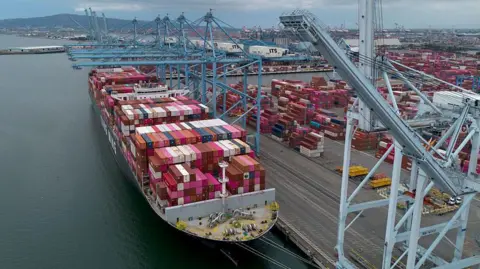
The IMF also flagged potential flare-ups in trade tensions as a concern, as they could prolong uncertainty and heavily impact economic activity.
Additional strains could arise from domestic political or geopolitical tensions, which could have broader implications for financial markets and commodity prices.
Furthermore, the IMF indicated the UK grew by 1.4% in 2025, with projections for this year maintained at 1.3%, making it the third fastest-growing economy in the G7.
Chancellor Rachel Reeves noted that the IMF had upgraded UK's growth forecasts for the third time since April 2025. However, the shadow chancellor expressed skepticism about the significance of this slight uptick.
The IMF expects global inflation to decline from an estimated 4.1% in 2025 to 3.4% by 2027, with UK inflation likely to return to the 2% target by the end of the year.
In light of recent scrutiny, the IMF emphasized that central bank independence is essential for sustaining macroeconomic stability and facilitating effective inflation control.
Without such independence, Gourinchas cautioned, the economic environment could deteriorate rapidly.