In brief
GKN Aerospace’s hazardous‑chemical tank blew hot vapor over Garden Grove, forcing emergency crews to keep it below 85 °F and issue evacuation orders for 50,000 residents. No injuries were reported, but officials warned that a leak or explosion could spread toxic fumes across the region.
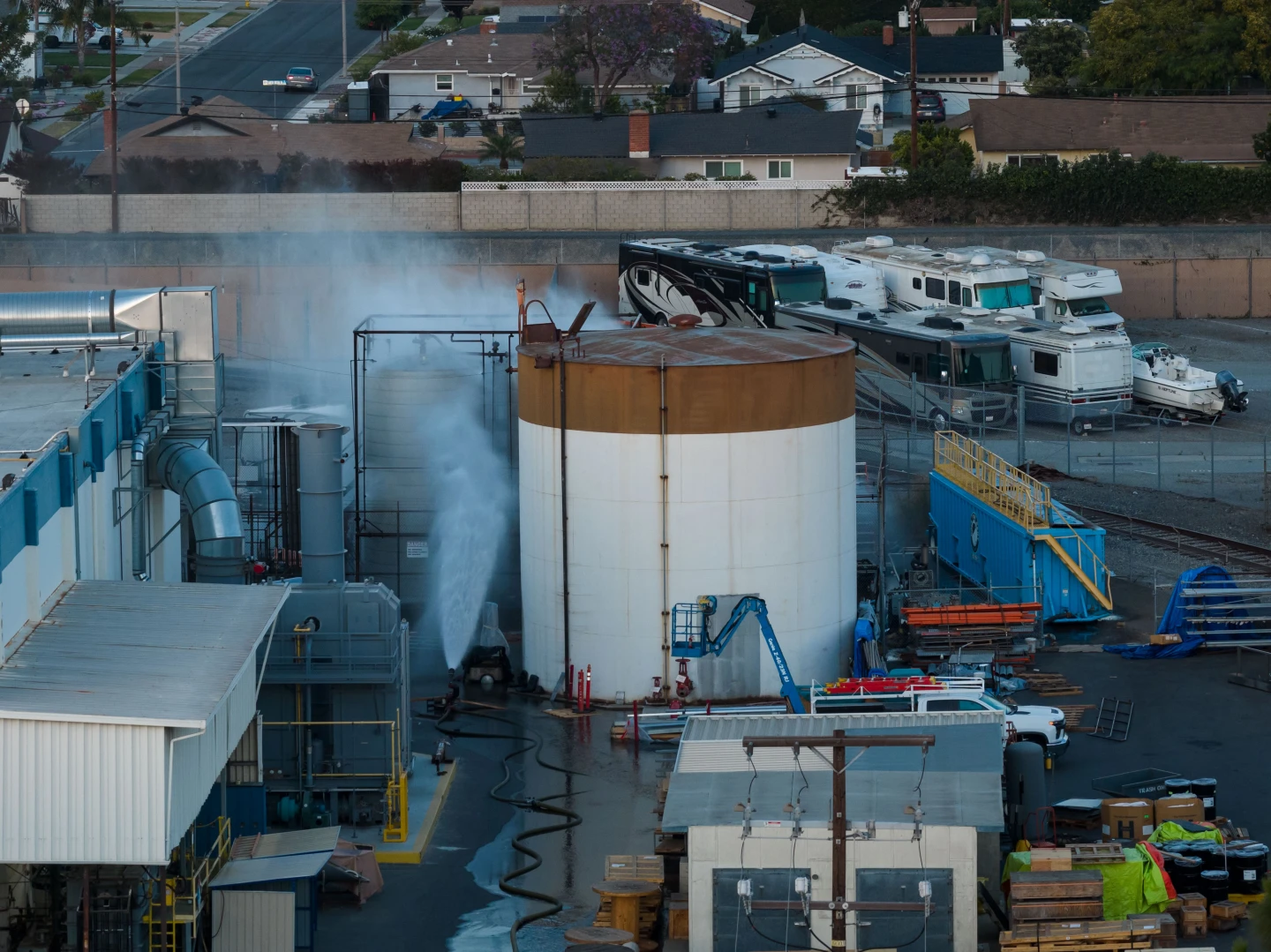
During the Memorial Day weekend, authorities were racing to contain a dangerous leak at a Southern California aerospace plant. A damaged storage tank at GKN Aerospace, holding roughly 6,000 to 7,000 gallons of methyl‑methacrylate, overheated last week and began releasing vapors. The chemical, a liquid used in plastics and adhesives, is flammable and can irritate the eyes, nose, and lungs.Thanks to swift action, no injuries were reported. Yet the risk was high enough that the Orange County Fire Authority issued a full‑scale evacuation covering more than 50,000 residents across Garden Grove and the west side of Anaheim. Firefighters kept spraying the tank with water to maintain temperatures below 85 °F, thereby reducing the pressure buildup that could cause a catastrophic release.Officials noted that the tank’s drainage valves were malfunctioning, leaving a dilemma: how to relieve the chemical pressure without causing a spill. On Sunday, the EPA’s deputy administrator, Lee Zeldin, reported that the most likely event would be a “low‑volume release.” This would allow officials to monitor the release, neutralise it, and contain any fallout.Methyl‑methacrylate, though it has a fruity smell that causes no immediate health effects when only inhaled in small quantities, can become dangerous in higher concentrations. Long‑term exposure might cause serious respiratory damage or unconsciousness. Orange County health officials confirmed that the evacuation zone was west of Anaheim, keeping major landmarks like Disneyland and its theme parks safe.Hydrostatic test results on Sunday indicated a possible crack in the tank, suggesting that the risk of a fire‑grade explosion might be low. Local fire inspector, Capt. Wayhowe Huang, said the tank was not releasing chemicals into the atmosphere at that time.GKN Aerospace has not yet resolved the leak but continues to cooperate with emergency services. As of this week’s briefing, the situation remains “ongoing,” with officials staying vigilant to prevent any sudden release that could broaden the toxic plume across Southern California. Residents in the evacuation zone have been escorted to shelters, and authorities urge them to avoid the area until the tank is confirmed safe.The incident highlights the importance of proper chemical storage and quick response protocols to prevent hazardous leaks from escalating into larger public‑safety events.