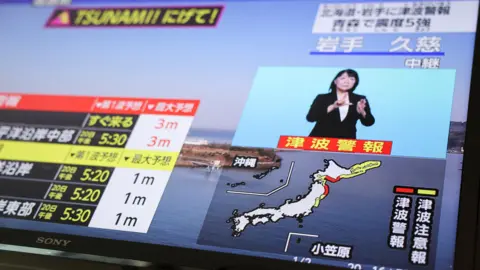
Officials in Japan have warned of an increased risk of a huge earthquake within the next week after a 7.7 magnitude quake struck off the northeast coast, triggering an evacuation order and warnings of tsunami waves reaching up to 3 meters.
Thousands of residents in coastal areas were instructed to evacuate to higher ground following the seismic event in waters off Iwate prefecture, located about 530 kilometers (330 miles) north of Tokyo.
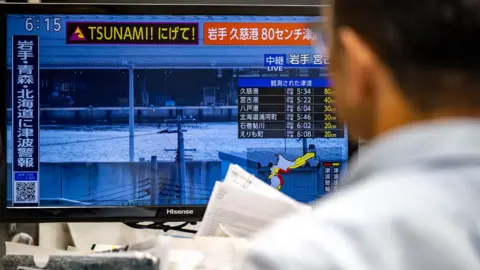
The most significant wave recorded so far was 80cm, yet the meteorological agency cautioned that even stronger quakes could occur, potentially leading to larger tsunami waves.
The agency has indicated that the possibility of a quake measuring 8.0 or higher is now "relatively higher than during normal times."
Memories of the devastating March 2011 quake that triggered a tsunami, causing over 18,000 deaths and leading to the Fukushima nuclear disaster, are still fresh in the minds of many Japanese citizens.
After Monday's quake, which occurred at a depth of 10 kilometers, alerts were issued to residents closest to the epicenter in Honshu and Hokkaido, while tremors were felt as far away as Tokyo.
In Hokkaido, tsunami alerts remained active for two hours post-quake, with one eyewitness reporting that local authorities were using loudspeakers to warn citizens about possible tsunami risks.
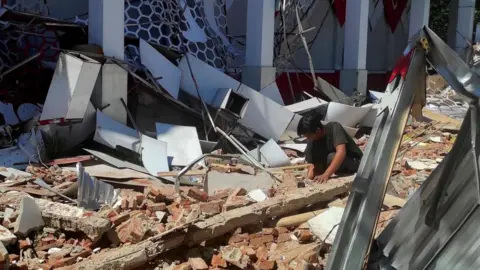
Japan's Cabinet Secretary, Minoru Kihara, reported that some bullet trains had been disrupted and approximately 100 homes experienced power outages, but there were no immediate reports of severe damage or injuries.
A tsunami warning was issued across parts of Japan’s east coast, the second-highest of three alert levels, urging residents to evacuate immediately from coastal areas. Prime Minister Sanae Takaichi emphasized the importance of moving to “higher, safer places.”
Japan's geographical position on the Pacific Ring of Fire results in around 1,500 earthquakes annually, comprising 10% of global quakes that measure 6.0 or higher.
The government has steadily adapted protocols for warning and preparedness due to prior experiences, aiming to protect lives and mitigate risks in the event of future seismic events.