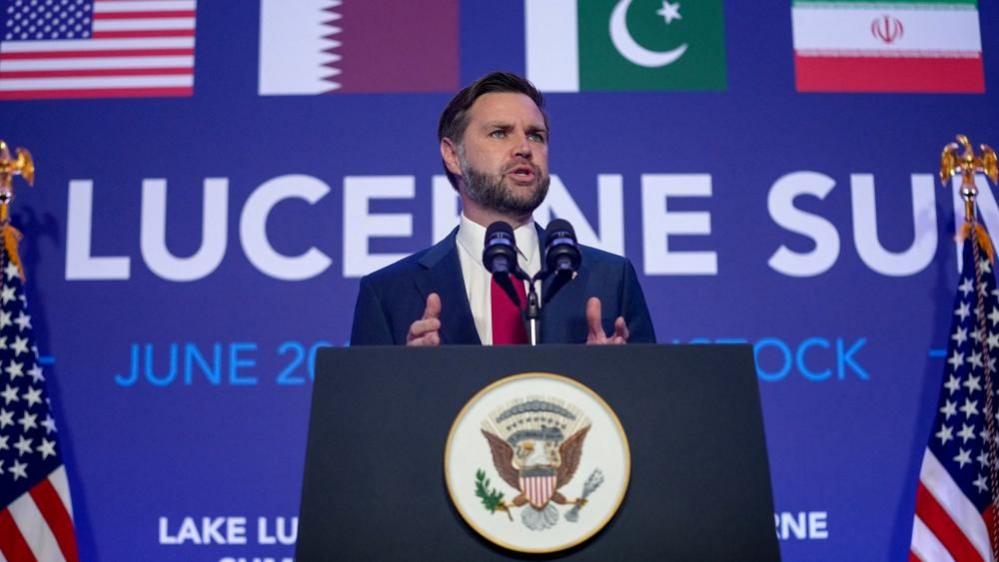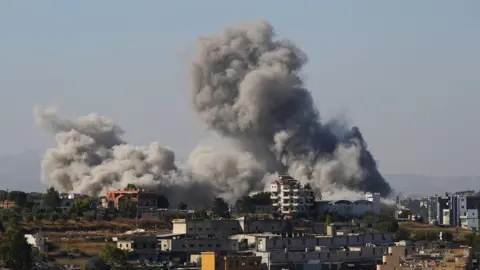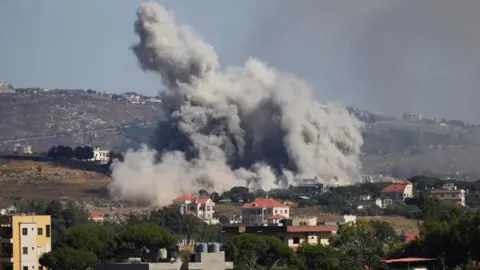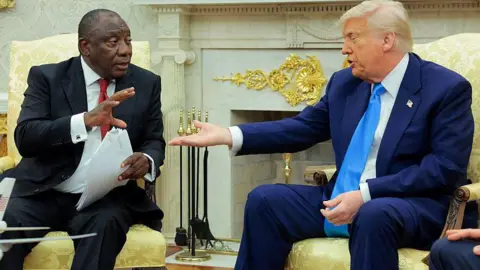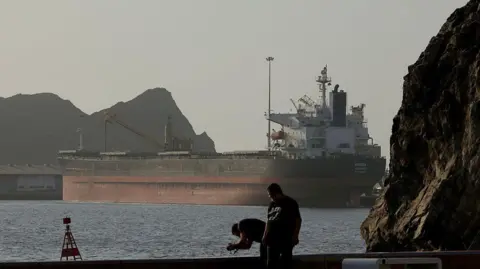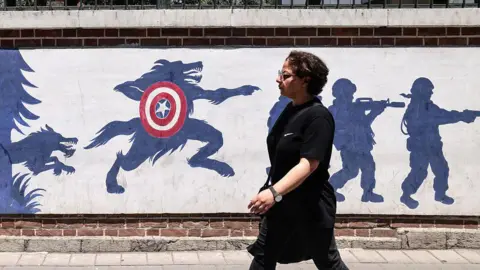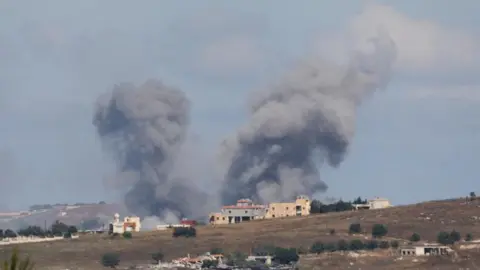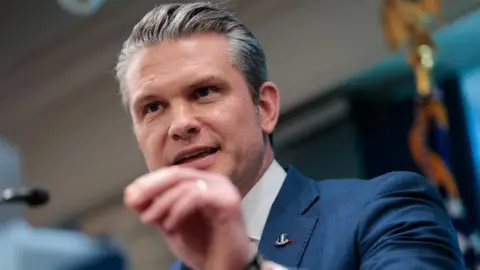
In the weeks since the US and Israel launched strikes on Iran, a narrative battle regarding the war's progress has unfolded at the center of American military power. Inside the Pentagon press briefings given by US Defence Secretary Pete Hegseth, the former Army National Guard Major and Fox News pundit, I've witnessed an evolution in messaging. From the onset, when he outlined America’s war aims, to the latest updates following a tentative truce, Hegseth's briefings have been characterized by a celebratory tone, touting what he described as 'a capital V military victory.' He emphasized the extent of US military force, declaring that America has dealt 'death and destruction from the sky all day long.' However, beyond the rhetoric, an intimate examination reveals a complex reality regarding what the US has achieved in its confrontational stance towards Iran.
Recent assessments highlight minimal advancements regarding Iran's nuclear issue, a fundamental objective set forth during the inception of the conflict. President Trump's primary goal aimed at preventing Iran from developing nuclear weapons—a claim Iran has consistently denied—has faced more hurdles than anticipated. Despite aggressive aerial campaigns against Iranian nuclear sites, such as those in Isfahan, Fordow, and Natanz, the leadership remains resilient, maintaining capabilities that could lead to the development of nuclear weapons eventually.
With a truce hanging by a thread, doubts about the progress of US objectives linger. Furthermore, internal assessments suggest that Iranian forces may still retain a substantial part of their conventional arsenal despite claims of their significant degradation.
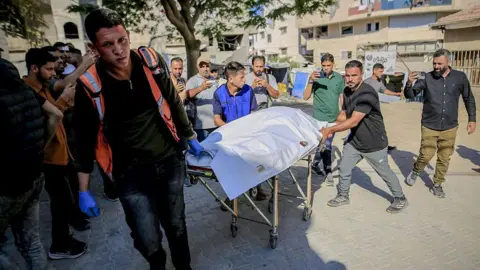
The human cost of this conflict has not gone unnoticed, with reports of casualties among US personnel and soaring military expenditures exceeding a billion dollars per day. As Trump navigates these tumultuous waters, political repercussions have emerged domestically, with a notable division among his supporters regarding the war's justification. The potential for an escalating economic crisis, exacerbated by rising gas prices due to geopolitical tensions, adds a layer of unpredictability to the Republican party’s standing in future elections.
As Iran asserts its regional power dynamics, the effectiveness of American military supremacy as a strategy to cement US influence in the Middle East is under scrutiny. The future of US-Iran relations hangs in the balance with the looming question of whether the aggressive strategy will yield the anticipated outcomes or exacerbate already fragile diplomatic ties.
Recent assessments highlight minimal advancements regarding Iran's nuclear issue, a fundamental objective set forth during the inception of the conflict. President Trump's primary goal aimed at preventing Iran from developing nuclear weapons—a claim Iran has consistently denied—has faced more hurdles than anticipated. Despite aggressive aerial campaigns against Iranian nuclear sites, such as those in Isfahan, Fordow, and Natanz, the leadership remains resilient, maintaining capabilities that could lead to the development of nuclear weapons eventually.
With a truce hanging by a thread, doubts about the progress of US objectives linger. Furthermore, internal assessments suggest that Iranian forces may still retain a substantial part of their conventional arsenal despite claims of their significant degradation.
The human cost of this conflict has not gone unnoticed, with reports of casualties among US personnel and soaring military expenditures exceeding a billion dollars per day. As Trump navigates these tumultuous waters, political repercussions have emerged domestically, with a notable division among his supporters regarding the war's justification. The potential for an escalating economic crisis, exacerbated by rising gas prices due to geopolitical tensions, adds a layer of unpredictability to the Republican party’s standing in future elections.
As Iran asserts its regional power dynamics, the effectiveness of American military supremacy as a strategy to cement US influence in the Middle East is under scrutiny. The future of US-Iran relations hangs in the balance with the looming question of whether the aggressive strategy will yield the anticipated outcomes or exacerbate already fragile diplomatic ties.