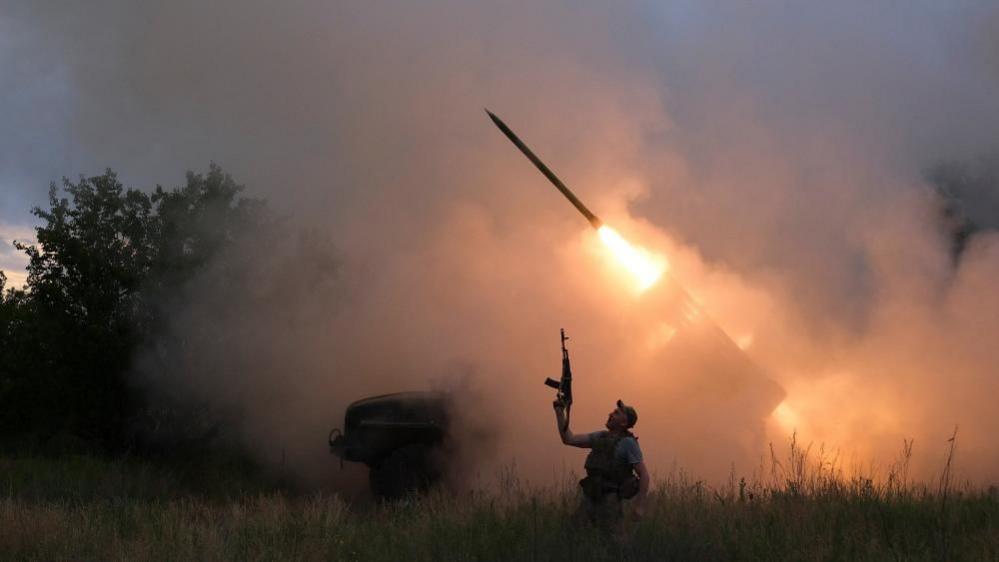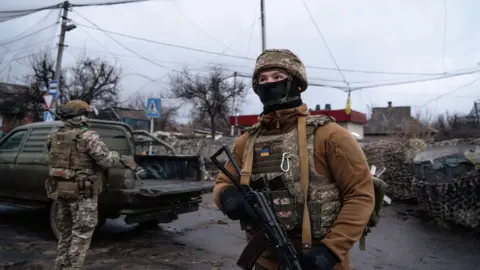
For Ukraine, the financial frontline is not just an unseen battlefield in its war with Russia, but a critical aspect of its survival and future ambitions. Finance Minister Sergii Marchenko emphasizes that maintaining a stable economy is essential not only for today but for the future Ukraine strives to build after four years of conflict. We don't want to be just a poor neighbour [to the EU], he states, expressing a desire to contribute military expertise to Europe.
Despite the war's toll, Marchenko acknowledges the financial support from the European Union, which recently pledged a significant €90 billion ($105 billion) loan to help cover Ukraine's budget shortfall over the next two years. However, the country faces mounting budgetary pressures, with forecasts indicating a spending requirement of around $112 billion for 2026, leaving a $45 billion gap.
Increased taxation within Ukraine aims to bolster domestic contributions to the military, which currently accounts for about 27% of the country’s GDP. Yet, experts warn that continuous tax increases combined with the prolonged nature of the conflict may jeopardize the economy's stability. The International Monetary Fund (IMF) has also expressed concerns regarding tax evasion and the need for Ukraine to maintain fiscal discipline.
As the war against Russian forces continues, challenges like inflation, power outages, and a shortage of skilled labor persist, complicating recovery efforts and stretching resources urgently needed for social and humanitarian needs. The potential economic fallout from delayed EU support due to political disputes poses further risks for Ukraine as it navigates both military and fiscal fronts, striving for resilience amid adversity.
Despite the war's toll, Marchenko acknowledges the financial support from the European Union, which recently pledged a significant €90 billion ($105 billion) loan to help cover Ukraine's budget shortfall over the next two years. However, the country faces mounting budgetary pressures, with forecasts indicating a spending requirement of around $112 billion for 2026, leaving a $45 billion gap.
Increased taxation within Ukraine aims to bolster domestic contributions to the military, which currently accounts for about 27% of the country’s GDP. Yet, experts warn that continuous tax increases combined with the prolonged nature of the conflict may jeopardize the economy's stability. The International Monetary Fund (IMF) has also expressed concerns regarding tax evasion and the need for Ukraine to maintain fiscal discipline.
As the war against Russian forces continues, challenges like inflation, power outages, and a shortage of skilled labor persist, complicating recovery efforts and stretching resources urgently needed for social and humanitarian needs. The potential economic fallout from delayed EU support due to political disputes poses further risks for Ukraine as it navigates both military and fiscal fronts, striving for resilience amid adversity.