Just over two years ago, when Sheikh Hasina won an election widely condemned as rigged in her favour, it was hard to imagine her 15-year grip on power being broken so suddenly, or that a rival party that had been virtually written off would make such a resounding comeback.
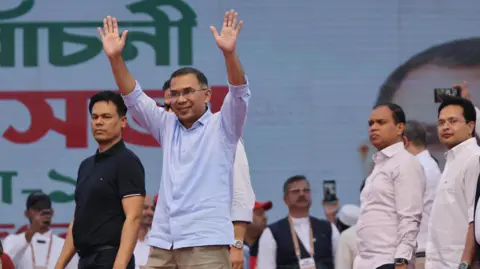
But in the cycle of Bangladeshi politics, this is one more flip-flop between Hasina's Awami League and the Bangladesh Nationalist Party (BNP), which have alternated holding power for decades. Except this is the first time that new BNP leader Tarique Rahman is formally leading the party - and the first time he's contested an election.
His mother Khaleda Zia, who died of an illness late last year, was the party's head for four decades. She took over after his father, Ziaur Rahman, the BNP founder and a key leader of Bangladesh's war for independence, was assassinated.
Accused of benefitting from nepotism, Tarique has faced allegations of corruption. His recent return to Bangladesh after 17 years in exile adds uncertainty to his leadership. While he has acted as a de-facto chair during his mother's imprisonment, many view him as an untested leader. Political scientist Navine Murshid notes that his lack of experience may work in Rahman's favor, as people seek a change.
Post-election, the BNP emphasizes restoring democracy and revitalizing Bangladesh's deteriorated democratic structures. Senior leader Amir Khasru Mahmud Chowdhury mentioned, All the democratic institutions and financial institutions, which have been destroyed over the last decade, we have to first put those back in order.
However, past promises from political parties have often fallen flat, leading to skepticism surrounding their intentions and capabilities.
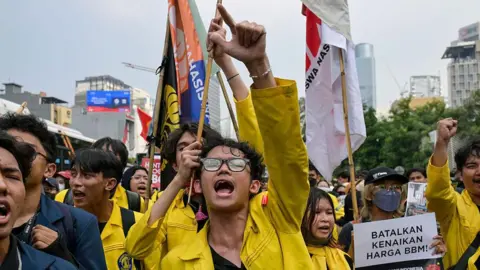
The youth, significant in the recent 'July uprising' against Hasina's administration, are no longer tolerant of empty promises and seek tangible improvements. As 19-year-old Tazin Ahmed stated, “The stepping down of the previous prime minister was not the victory. When our country runs smoothly without any corruption, and the economy becomes good, that will be our main victory.”
With increasing violence under interim leadership, Rahman's government faces immense pressure to address law and order, revitalize the economy, cut food prices, and cater to the needs of a large, youthful demographic.
The election also marks a unique moment for the Islamist Jamaat-e-Islami party, winning a significant number of seats for the first time amid the unfolding change. The BNP acknowledges the challenges ahead, with leaders expressing the urgent need to institutionalize democratic engagement post-election.
As Hasina's Awami League evaluates its next steps from exile, recent shifts have fundamentally altered the political framework of Bangladesh. It remains to be seen if Rahman can emerge not only as a leader but as a force for genuine change amidst the expectations of a nation hungry for stability and unity.