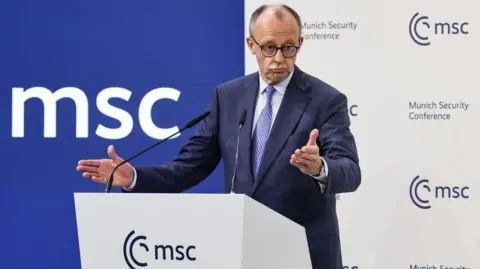
German Chancellor Friedrich Merz announced that the latest peace plan draft for Ukraine was shared with U.S. President Donald Trump, which includes proposals concerning territorial concessions Kyiv may contemplate.
Merz emphasized during a press conference that the matter of territory should ultimately be decided by the Ukrainian president and the people of Ukraine. This sentiment was reiterated in discussions held with President Trump.
In recent weeks, European leaders have actively collaborated with Ukraine to formulate a peace plan that accommodates Kyiv's interests and concerns. Merz highlighted the need for the U.S. to engage constructively, noting Trump's frustrations with the complexities of sovereignty over territories occupied by Russia.
Concerns have arisen among European nations regarding Trump's negotiating stance, particularly the fear that he may push for a solution favoring Russian interests, which would undermine the hard-fought rights of Ukraine.
Merz stressed the importance of avoiding hastily forcing a peace agreement upon Ukraine that lacks public support following years of conflict. In conversations with French President Emmanuel Macron and U.K. Prime Minister Sir Keir Starmer, it was made clear that European perspectives must be considered.
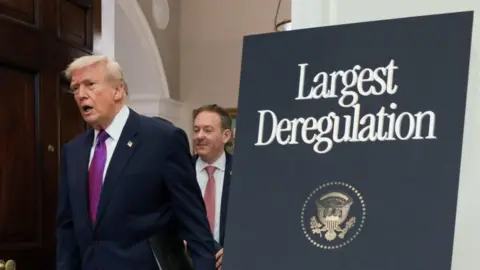
Trump acknowledged the 'strong' language surrounding discussions on Ukraine, indicating that he had not yet decided on his participation in any upcoming conference in Europe.
Ukrainian President Volodymyr Zelensky has shown readiness to engage directly with Trump, contingent on resolving key issues beforehand. Territorial disputes remain a contentious topic, with Moscow demanding Ukraine relinquish control over certain eastern regions, a condition Kyiv adamantly refuses.
Zelensky asserted, 'We have no legal right to [cede territory], under Ukrainian law, our constitution and international law,' reinforcing that Ukraine would not cede territory under any moral consideration.
As Zelensky prepares for further coalition talks with leaders including Merz, Macron, and Starmer, diplomatic relations continue to strengthen amid muted responses from Moscow. Russian officials have attempted to convey a united front with Washington regarding peace discussions, reinforcing Russia's position on Ukraine's status during negotiations.
Discussions on security guarantees for Ukraine have also emerged, with Zelensky proposing that elections could take place if sufficient assurances from the U.S. and European nations were obtained. As NATO leaders, including Mark Rutte, reiterate the urgency of addressing the Russian threat, the situation in Ukraine remains dynamically uncertain.