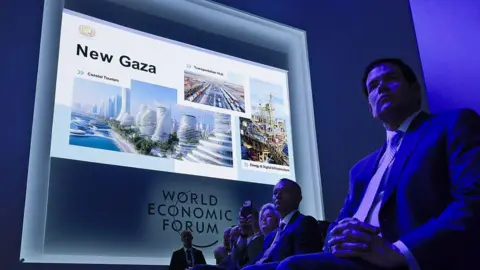
The US has unveiled its plans for a New Gaza that would see the devastated Palestinian territory rebuilt from scratch.
Slides showed dozens of skyscrapers stretching along the Mediterranean coast and housing estates in the Rafah area, while a map outlining the phased development of new residential, agricultural and industrial areas for the 2.1 million population.
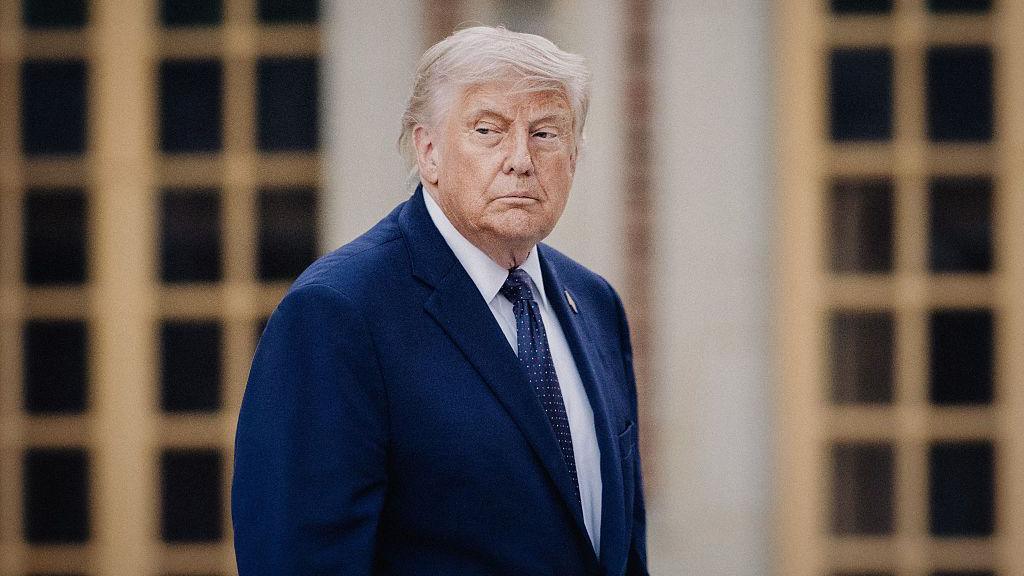
They were presented during a signing ceremony at the World Economic Forum in Davos for President Donald Trump's new Board of Peace, which is tasked with ending the two-year war between Israel and Hamas and overseeing reconstruction.
We're going to be very successful in Gaza. It's going to be a great thing to watch, Trump declared.
I'm a real estate person at heart and it's all about location. And I said: 'Look at this location on the sea. Look at this beautiful piece of property. What it could be for so many people.'
Trump's son-in-law Jared Kushner, who helped broker the ceasefire that took effect in October, said 90,000 tonnes of munitions had been dropped on Gaza and there were 60 million tonnes of rubble to clear.
In the beginning, we were toying with the idea of saying: 'Let's build a free zone, and then we have a Hamas zone.' And then we said: 'You know what, let's just plan for catastrophic success,' he told the ceremony.
A map of the US Master Plan showed a zone reserved for coastal tourism, where there would be 180 tower-blocks as well a number of zones for residential areas, industrial complex, data centres, advanced manufacturing and parks, agriculture and sports facilities.
Redevelopment would be divided into four phases, starting in Rafah and then gradually moving north towards Gaza City.
Kushner also declared that the demilitarisation of Gaza was starting now, noting that without security nobody is going to make investments.
Hamas has previously refused to give up its weapons without the creation of an independent Palestinian state, yet Trump warned the group: They have to give up their weapons and if they don't do that, it's going to be the end of them.
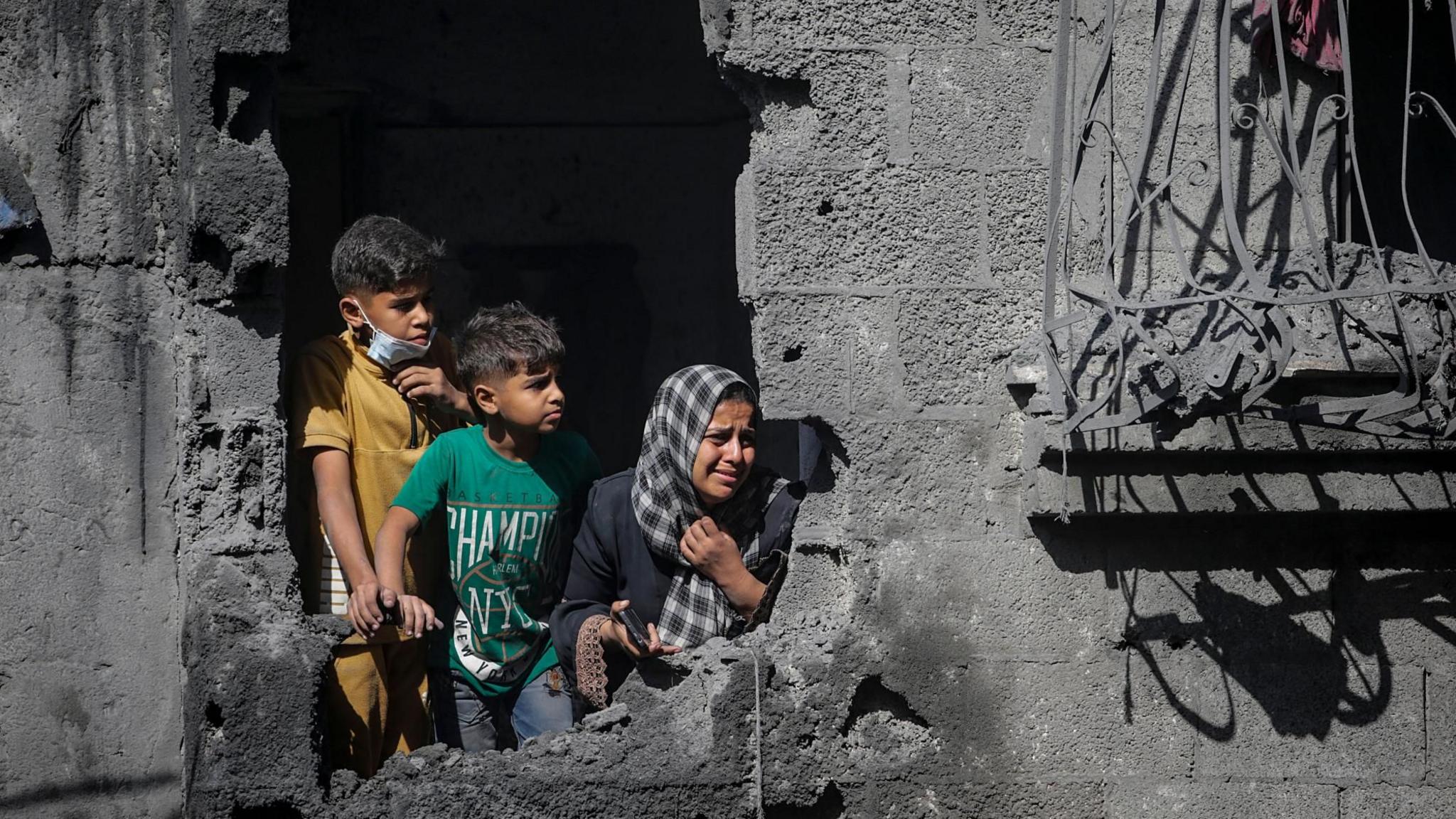
The initiative has attracted mixed reactions, with critics voicing concerns about the humanitarian crisis unfolding in Gaza and the feasibility of such grand plans amidst ongoing tensions.