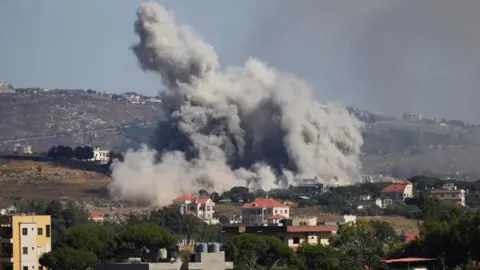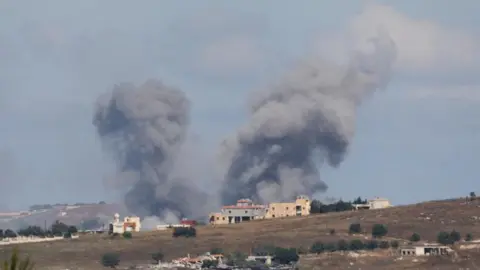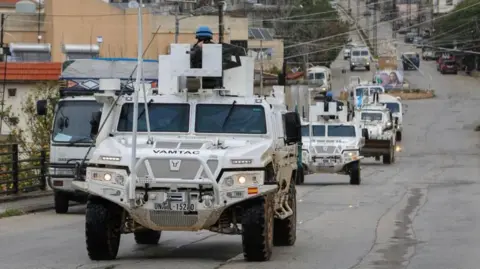
Two Indonesian peacekeepers were killed on Monday by a 'roadside explosion' in southern Lebanon, UN peacekeeping chief Jean-Pierre Lacroix stated, referencing initial investigation results. The explosion, described as being of 'unknown origin,' destroyed the peacekeepers' vehicle near Bani Hayyan. Furthermore, a third peacekeeper was severely injured, and another sustained minor injuries in the blast.
This incident follows another attack just a day prior, where an Indonesian peacekeeper was killed by a projectile, also of unknown origin, in Adchit Al Qusayr, southern Lebanon. The United Nations Interim Force in Lebanon (Unifil) announced an investigation into both incidents.
Lacroix noted that initial findings indicated the Monday explosion was likely due to an improvised explosive device (IED), as further elaborated by UN spokesperson Stéphane Dujarric. Additionally, it was suggested that the previous day's fatality might have been caused by an explosive that landed at the location where the Indonesian troops were stationed.
These tragic deaths come amidst escalating military actions, as the Israeli military indicated plans to intensify operations against Hezbollah in Lebanon, following a series of rocket attacks targeting Israel. The Israel Defense Forces (IDF) denied any involvement in the roadside explosion, emphasizing that no explosive devices had been placed by their troops in that area.
In a statement, Unifil expressed its condolences to the families and colleagues of the fallen peacekeepers, while reaffirming its commitment to maintaining peace along the Blue Line— the de facto border between Lebanon and Israel. Since the establishment of Unifil in 1978, over 339 peacekeepers have lost their lives while working to stabilize the region. The security situation remains perilous, with a substantial number of civilian casualties reported amid ongoing military actions between Israel and Lebanese factions.
This incident follows another attack just a day prior, where an Indonesian peacekeeper was killed by a projectile, also of unknown origin, in Adchit Al Qusayr, southern Lebanon. The United Nations Interim Force in Lebanon (Unifil) announced an investigation into both incidents.
Lacroix noted that initial findings indicated the Monday explosion was likely due to an improvised explosive device (IED), as further elaborated by UN spokesperson Stéphane Dujarric. Additionally, it was suggested that the previous day's fatality might have been caused by an explosive that landed at the location where the Indonesian troops were stationed.
These tragic deaths come amidst escalating military actions, as the Israeli military indicated plans to intensify operations against Hezbollah in Lebanon, following a series of rocket attacks targeting Israel. The Israel Defense Forces (IDF) denied any involvement in the roadside explosion, emphasizing that no explosive devices had been placed by their troops in that area.
In a statement, Unifil expressed its condolences to the families and colleagues of the fallen peacekeepers, while reaffirming its commitment to maintaining peace along the Blue Line— the de facto border between Lebanon and Israel. Since the establishment of Unifil in 1978, over 339 peacekeepers have lost their lives while working to stabilize the region. The security situation remains perilous, with a substantial number of civilian casualties reported amid ongoing military actions between Israel and Lebanese factions.