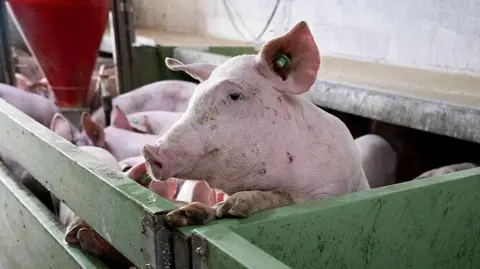
Jordi Saltiveri gazes across his farmland, on which he keeps 8,000 pigs, and remembers the day late last year when the news emerged that African Swine Fever (ASF) had been detected in Spain. I felt sad, angry, impotent, he says. Once it's known that a country is positive for ASF, other countries will stop importing its pork.
Saltiveri's farm, owned by his father and grandfather before him, is located in the province of Lleida, Catalonia. The outbreak remains relatively contained and has not reached his area. Nonetheless, the impact is being felt across the Spanish pork industry, affecting farmers like Saltiveri, who is also president of the federation of farming cooperatives in Catalonia.
Each pig we sell for slaughter has lost about €30 to €40 of its value compared to before the outbreak, he says, voicing concerns over significant financial losses. ASF is highly contagious among pigs and wild boars but does not pose a threat to humans. The outbreak's center point is Collserola Park, where the infection was first detected.
Spanish authorities quickly restricted access to Collserola Park and are working to find more infected boar carcasses. Officials believe that the wild boar population is a key factor in spreading ASF, with the region's population estimated at between 120,000 and 180,000 boar. The Catalan government aims to halve that number and has already culled 24,000 animals this year.
As measures are taken to address the situation, the economic implications are severe. Pork exports from Catalonia fell 17% in January compared to the previous year, resulting in an estimated loss of over €600 million for Spain's pork industry since the outbreak started. Meanwhile, some countries have closed import markets entirely, while others have implemented localized bans.
Domestic consumption, however, seems resilient. Shoppers at local markets express confidence in the safety protocols established to control ASF, citing strict health measures in place as a comforting factor. Despite the challenges faced, Spain's pork farmers remain hopeful as authorities intensify efforts to combat the spread of ASF.
Saltiveri's farm, owned by his father and grandfather before him, is located in the province of Lleida, Catalonia. The outbreak remains relatively contained and has not reached his area. Nonetheless, the impact is being felt across the Spanish pork industry, affecting farmers like Saltiveri, who is also president of the federation of farming cooperatives in Catalonia.
Each pig we sell for slaughter has lost about €30 to €40 of its value compared to before the outbreak, he says, voicing concerns over significant financial losses. ASF is highly contagious among pigs and wild boars but does not pose a threat to humans. The outbreak's center point is Collserola Park, where the infection was first detected.
Spanish authorities quickly restricted access to Collserola Park and are working to find more infected boar carcasses. Officials believe that the wild boar population is a key factor in spreading ASF, with the region's population estimated at between 120,000 and 180,000 boar. The Catalan government aims to halve that number and has already culled 24,000 animals this year.
As measures are taken to address the situation, the economic implications are severe. Pork exports from Catalonia fell 17% in January compared to the previous year, resulting in an estimated loss of over €600 million for Spain's pork industry since the outbreak started. Meanwhile, some countries have closed import markets entirely, while others have implemented localized bans.
Domestic consumption, however, seems resilient. Shoppers at local markets express confidence in the safety protocols established to control ASF, citing strict health measures in place as a comforting factor. Despite the challenges faced, Spain's pork farmers remain hopeful as authorities intensify efforts to combat the spread of ASF.