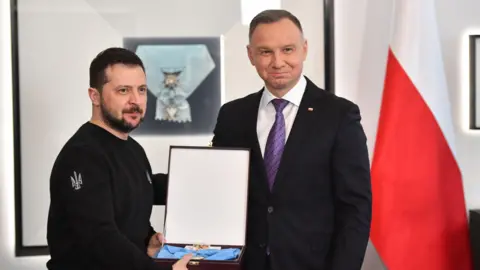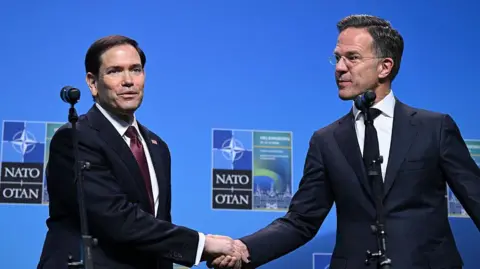
In a tense moment for trans-Atlantic security, US Secretary of State Marco Rubio is working to stabilize NATO's response to contradictory US military decisions. His remarks came during a press conference in Sweden following a NATO foreign ministers' meeting, where allies expressed bewilderment over Trump's recent announcements. The US president had abruptly canceled a 4,000-troop deployment to Poland while simultaneously ordering 5,000 new troops for the same country—a move that followed the withdrawal of 5,000 forces from Germany. Swedish Foreign Minister Maria Malmer Stenergard acknowledged the situation was 'confusing indeed, and not always easy to navigate,' highlighting the strain on alliance cohesion.
Rubio defended the adjustments as necessary recalibrations, stating: 'The United States is constantly reevaluating its troop presence in view of its global commitments.' He emphasized that such shifts were 'well understood in the alliance' and conducted 'in coordination with our allies,' though he admitted allies would 'not be thrilled.' The timing of the announcements—delivered via Truth Social with references to Trump's personal relationship with Polish President Karol Nawrocki—has raised questions about transparency and strategic coherence.
The confusion underscores broader tensions: US troop reductions in Europe, driven by Trump's 'America First' priorities, coincide with rising NATO concerns over Europe's reliance on US security guarantees. NATO Secretary General Mark Rutte recently stated the alliance trajectory toward reduced US dependence will continue. Meanwhile, the US remains heavily committed to European security, with over 36,000 troops in Germany alone—a legacy dating to Cold War-era deployments. Yet, as the US reorients toward Middle East conflicts amid the Israel-Hamas war, questions grow about how troop movements align with Ukraine support.
Rubio stressed NATO's dual importance to both Europe and the US: 'I understand NATO is valuable to Europe, and it should be. It also has to be valuable to the United States.' As NATO leaders monitor the unfolding decisions, the alliance faces a critical test: can it navigate the US's shifting priorities without fracturing trans-Atlantic unity? With the next summit approaching, the situation remains fluid, though Rubio's reassurances suggest diplomatic efforts are underway to bridge the gap.}
Rubio defended the adjustments as necessary recalibrations, stating: 'The United States is constantly reevaluating its troop presence in view of its global commitments.' He emphasized that such shifts were 'well understood in the alliance' and conducted 'in coordination with our allies,' though he admitted allies would 'not be thrilled.' The timing of the announcements—delivered via Truth Social with references to Trump's personal relationship with Polish President Karol Nawrocki—has raised questions about transparency and strategic coherence.
The confusion underscores broader tensions: US troop reductions in Europe, driven by Trump's 'America First' priorities, coincide with rising NATO concerns over Europe's reliance on US security guarantees. NATO Secretary General Mark Rutte recently stated the alliance trajectory toward reduced US dependence will continue. Meanwhile, the US remains heavily committed to European security, with over 36,000 troops in Germany alone—a legacy dating to Cold War-era deployments. Yet, as the US reorients toward Middle East conflicts amid the Israel-Hamas war, questions grow about how troop movements align with Ukraine support.
Rubio stressed NATO's dual importance to both Europe and the US: 'I understand NATO is valuable to Europe, and it should be. It also has to be valuable to the United States.' As NATO leaders monitor the unfolding decisions, the alliance faces a critical test: can it navigate the US's shifting priorities without fracturing trans-Atlantic unity? With the next summit approaching, the situation remains fluid, though Rubio's reassurances suggest diplomatic efforts are underway to bridge the gap.}