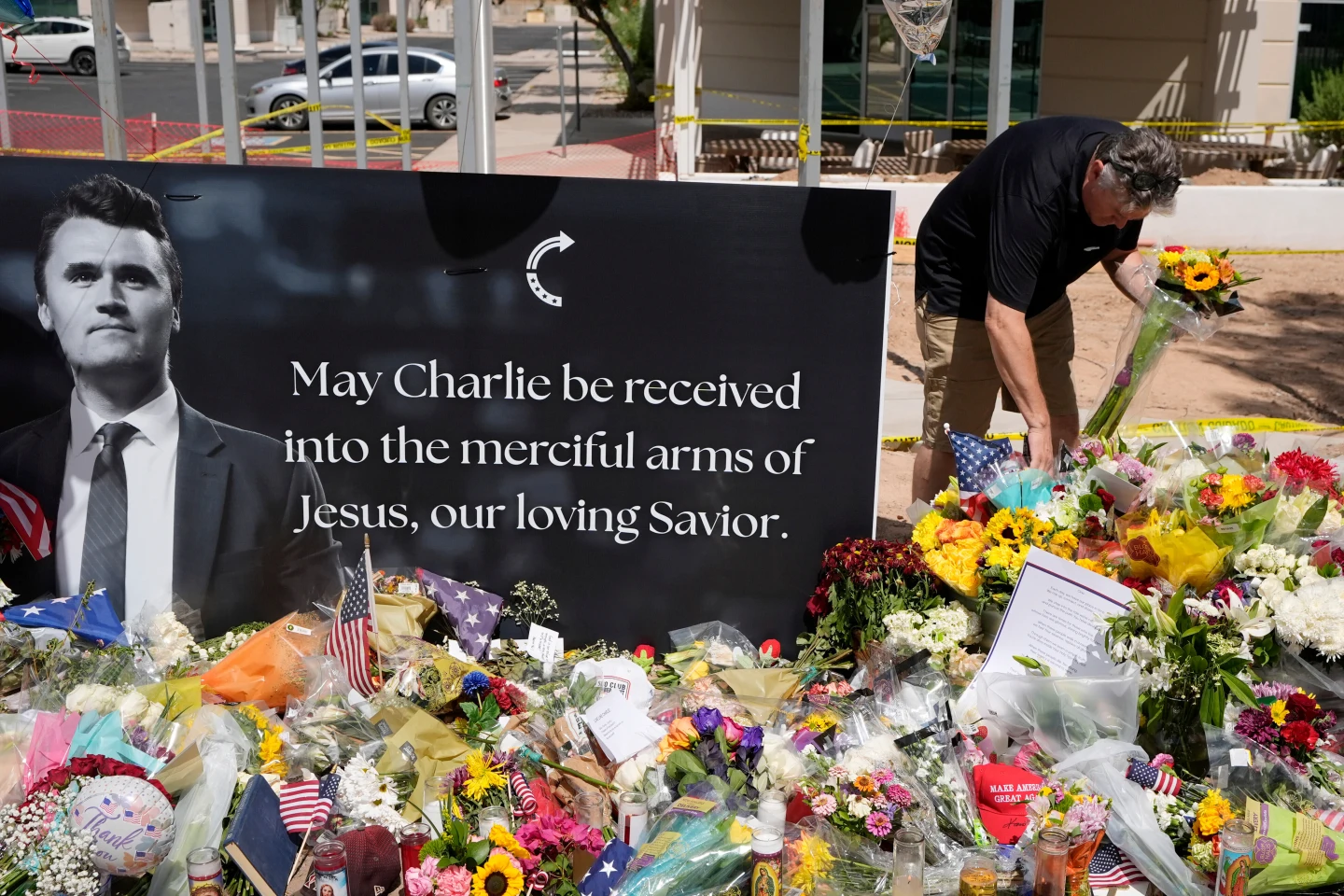
A new law in Kansas allows college students to sue their universities over alleged violations of free speech rights. Simultaneously, Tennessee has enacted legislation mandating the inclusion of 'the positive impacts of religion' in American history curricula. The shared inspiration for both laws: the controversial figure, Charlie Kirk.
These two measures represent early implementations of what could be a broader wave of legislation commemorating Kirk, who tragically lost his life during a campus event last year. An analysis suggests over 60 bills in more than 20 states are seeking to promote his conservative ideology, as reported by the Associated Press.
Controversy surrounds these laws, given Kirk's provocative history in campus discussions. In Kansas, Republicans managed to override a veto from Democratic Governor Laura Kelly, who warned that the new law might create confusion in judicial and educational settings.
In Tennessee, the political landscape, largely controlled by Republicans, has led to criticism from some Democrats. They condemned the pro-Kirk legislation, pointing to Kirk’s past remarks deemed offensive about various marginalized groups.
During discussions around the new 'Charlie Kirk American Heritage Act,' Democratic state Rep. Sam McKenzie expressed frustration, questioning the need for the legislation and suggesting a shift in focus.
The 'Charlie Kirk Act' from Tennessee aims to reaffirm historical narratives centered around Judeo-Christian values, allowing public educational institutions to address religion’s beneficial roles in American history, citing various historical figures and events. However, some lawmakers speak out against the implications of endorsing a single religion in the public education system.
Kansas's new law, acronymed as the “Kansas Intellectual Rights and Knowledge” act, categorizes outdoor areas on college campuses as venues for free speech. The bill’s inception was motivated by an incident involving Kirk at Kansas State University, where his microphone was muted during an event, leading to significant backlash.
While approximately half of U.S. states already have free speech laws on college campuses, the Kansas legislation seeks to establish further protections for student organizations hosting events. It permits legal action against institutions, with potential damages set at a minimum of $500 for violations.
Despite the pushback, many politicians continue to advocate for Kirk’s legacy. Critics, however, warn of the consequences of immortalizing a figure viewed by some as promoting hate and intolerance.
In Louisiana, a new bill named the 'Charlie Kirk Success Sequence Act' propels forward similar values by mandating teachings aimed at high school students about pathways to success, underscoring Kirk's ongoing influence in state education policies.
As these measures unfold across different states, they highlight the growing intersection of education, political ideology, and individual rights, revealing the deep divides in contemporary American society.