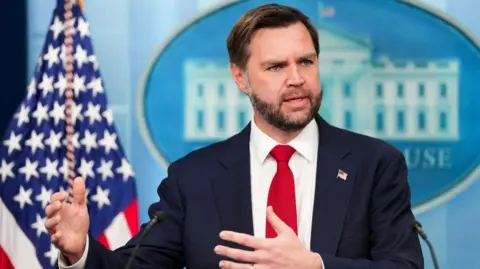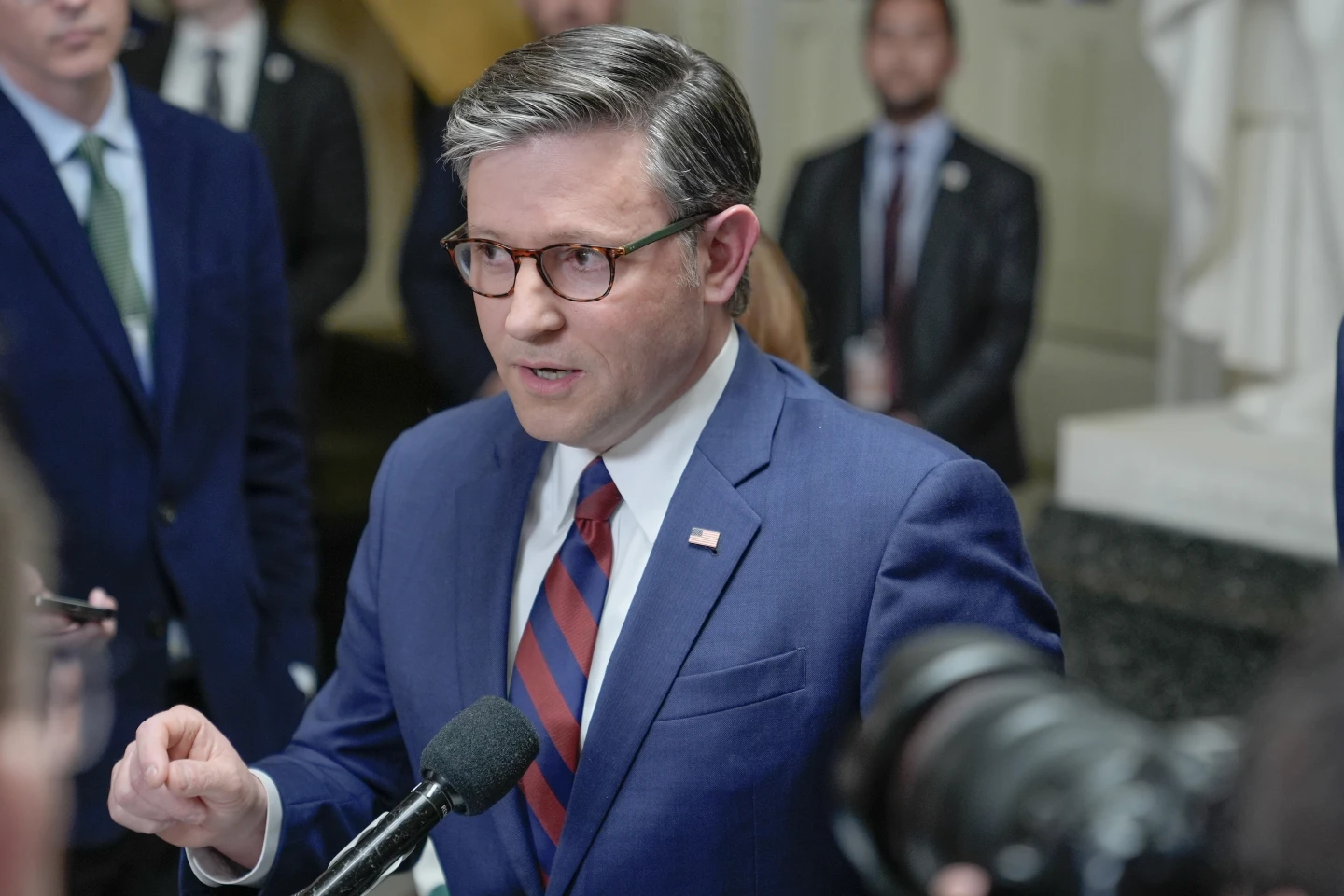
WASHINGTON (RTWNews) — In a bid to move past the standoff causing a record partial government shutdown, House Speaker Mike Johnson and Senate Majority Leader John Thune convened on Wednesday to announce a strategy aimed at fully funding the Department of Homeland Security (DHS).
In a joint statement, they declared their intent to push forward with funding through two different pathways. The first is to follow the usual appropriations process, while the second will pursue a reconciliation bill, which Republicans may need to handle without Democratic backing later in the year.
Despite their unified front, the prospective success of these plans remains uncertain. Democrats are poised to resist these initiatives, while there could also be disagreements within the Republican Party itself.
Expressing gratitude towards the President, the duo stated, “We appreciate and share the President’s determination to once and for all bring an end to the Democrat DHS shutdown.”
A legislative stalemate had formed earlier, with Senate suggestions for funding failing to include allocations to U.S. Immigration and Customs Enforcement and U.S. Border Patrol, sidelining Democratic calls for new agency regulations.
House Republicans endorsed a 60-day funding plan for DHS, allowing the shutdown to persist as lawmakers left for a two-week recess in their districts. Cooperation from Senate Democrats will be necessary, yet their willingness to engage remains unclear.
Trump, in a recent social media statement, underscored the urgency of passing legislation focused on immigration funding by June 1, insisting that the Radical Left Democrats would not be able to obstruct efforts to support border security and ICE agents.
“We are going to work as fast, and as focused, as possible to replenish funding for our Border and ICE Agents,” he affirmed.
In a joint statement, they declared their intent to push forward with funding through two different pathways. The first is to follow the usual appropriations process, while the second will pursue a reconciliation bill, which Republicans may need to handle without Democratic backing later in the year.
Despite their unified front, the prospective success of these plans remains uncertain. Democrats are poised to resist these initiatives, while there could also be disagreements within the Republican Party itself.
Expressing gratitude towards the President, the duo stated, “We appreciate and share the President’s determination to once and for all bring an end to the Democrat DHS shutdown.”
A legislative stalemate had formed earlier, with Senate suggestions for funding failing to include allocations to U.S. Immigration and Customs Enforcement and U.S. Border Patrol, sidelining Democratic calls for new agency regulations.
House Republicans endorsed a 60-day funding plan for DHS, allowing the shutdown to persist as lawmakers left for a two-week recess in their districts. Cooperation from Senate Democrats will be necessary, yet their willingness to engage remains unclear.
Trump, in a recent social media statement, underscored the urgency of passing legislation focused on immigration funding by June 1, insisting that the Radical Left Democrats would not be able to obstruct efforts to support border security and ICE agents.
“We are going to work as fast, and as focused, as possible to replenish funding for our Border and ICE Agents,” he affirmed.