In brief
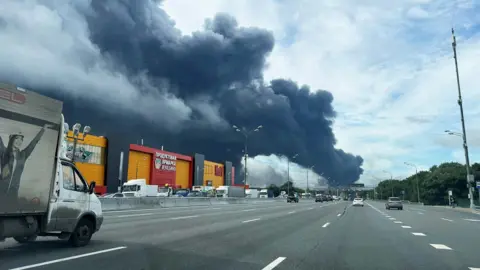
Moscow’s Kapotnya refinery was struck in the largest Ukrainian drone assault of the war, sending a plume of black smoke over the capital. Residents in the southeast said they could see oily specks forming a light drizzle that settled on their clothes. The city’s authorities warned residents to close windows and evacuate vulnerable families as the incident raised questions about the effectiveness of Moscow’s air‑defence system. Ukraine’s attack is seen by Zelensky as retaliation for earlier Russian strikes on Kyiv, while Russia’s leaders threatened a broader response. The strike’s fallout highlights the ongoing conflict’s shifting battlefield and the human toll on ordinary Russians.
The Kapotnya oil refinery in south‑eastern Moscow was hit in the largest Ukrainian drone attack of the war, sending a thick black plume that reportedly fell on residents, who described it as black rain.
Nearly 200 drones were launched toward the capital, according to Russian defence officials, with 17 people wounded by the blasts and thick smoke that made the air thick and opaque.
Moscow authorities denied that oil “rain” had been falling, but warned residents in the affected district to keep windows closed and urged seniors, children and people with respiratory conditions to leave the area immediately.
The refinery has been hit three times this month – the second time within the last week – with a drone strike blowing off the top of a large silo and sending the roof of a storage tank flying dozens of metres into the air, witnessed on social media.
A nearby shopping centre caught fire after debris from a drone fell on the building, and footage shows a drone crashing into a high‑rise, raining glass and metal shards down on the street below.
The attack triggered the temporary closure of Moscow’s four airports, causing over 500 flights to be cancelled or delayed, and sparked a debate over the resilience of Russia’s air‑defence around key infrastructure.
Ukraine’s foreign minister said the strike was a response to a recent Russian attack on Kyiv’s Pechersk Lavra monastery, while Russia’s foreign minister warned that additional strikes on Ukraine would be carried out “on a mass scale.”
The incident underscores the growing reach of long‑range drone attacks, which now routinely penetrate Moscow’s air‑defence network, raising concerns that more advanced counter‑measures are urgently needed to protect the capital and its civilian population.