In brief
France has hit a new record high and is struggling with the fallout. With only 25% of homes equipped with air‑conditioning, schools, hospitals and apartments are leaving the public to cope. Politicians from both sides are now debating government subsidies and infrastructure plans to install cooling units. The debate is not just about comfort – critics argue it fuels carbon emissions, while supporters say it is vital for health during extreme heat.
France’s latest heatwave saw temperatures push close to 40°C, a new high for June, and set the stage for an urgent public health crisis. The country, where only about 25 % of households have a permanent air‑conditioning unit, is facing increasing pressure on schools, hospitals and residential buildings.
French press reports that Marine Le Pen’s National Rally has called for a ‘nationwide plan clim’ to provide subsidised air‑conditioning for schools and hospitals, while the Greens have conceded that the heat may finally force a rethink on the policy.
Marie Tondelier, head of the Ecologists party, said, “There are places where we just can’t do without it now.” Her comments marked a shift from the parties’ historic opposition to air‑conditioning as a ‘climate’ solution.
Hospital workers and teachers have taken to social media, calling for faster deployment of cooling systems. Some unions worry that limited installation will keep staff in places that are “intolerable, and in many cases, unsafe.”
While critics argue that air‑conditioners increase electricity demand and use refrigerants that contribute to climate change, the French nuclear grid provides a relatively low‑carbon electricity mix, though the accompanying heat‑release to street air still raises urban temperatures.
Political parties have been divided: the conservative president of the Paris regional council, Valérie Pécresse, claimed that an “anti‑clim ideology” keeps the state from acting, and urged the national government to include air‑conditioning in future development plans. Meanwhile, the left has historically viewed the practice as a symbol of energy waste, until the present crisis required reassessment.
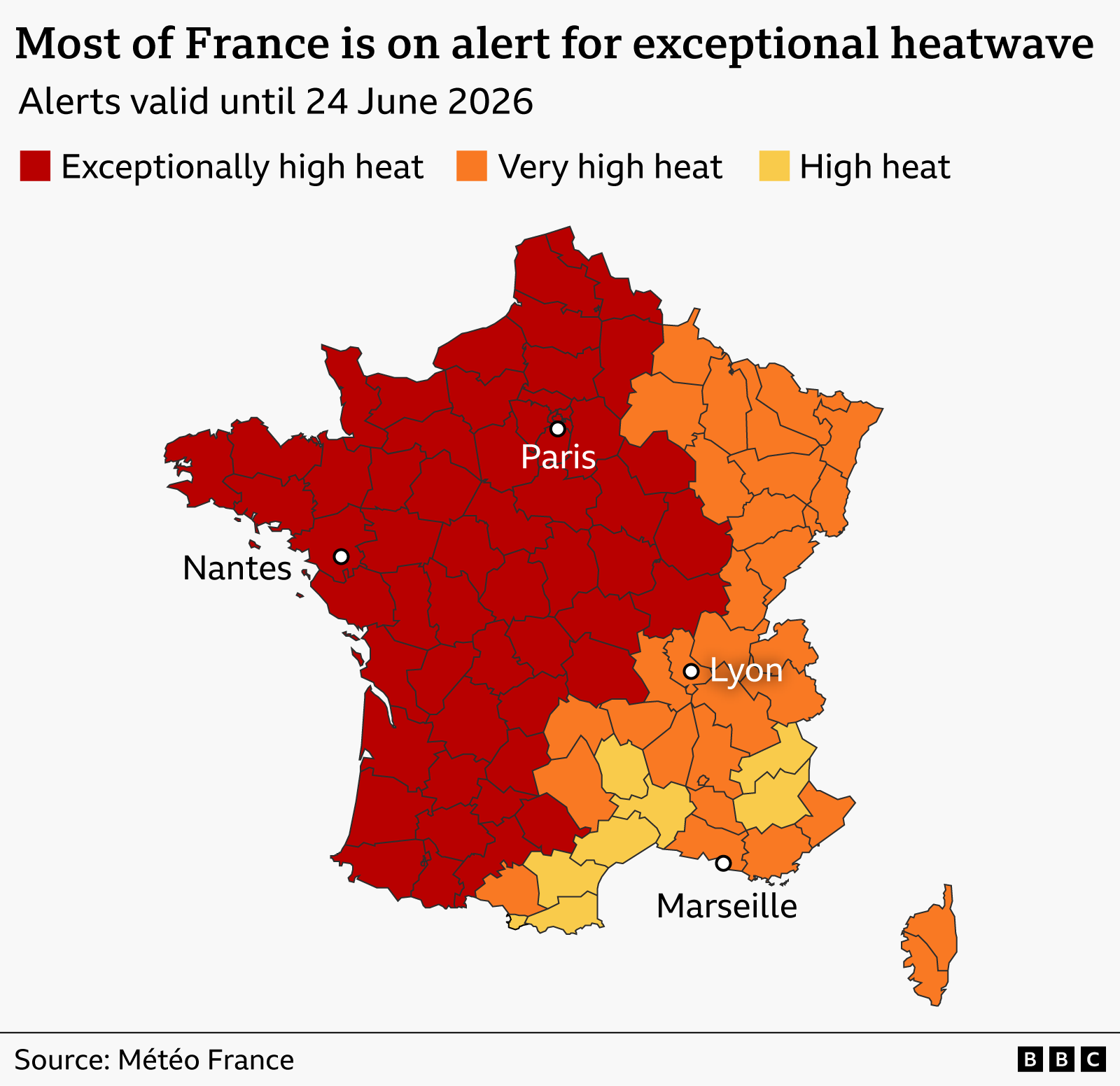
Across the country, the heat is at “exceptionally high” and “very high” levels, according to the National Meteorological Service’s map that covers most urban centres, including Paris, Nantes and Lyon.