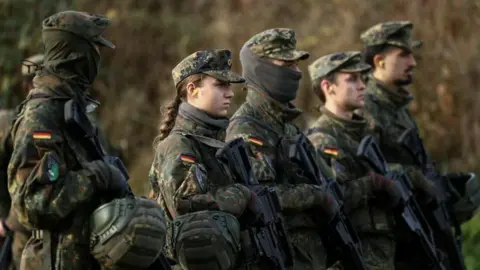
Large conscripted armies were a feature of Nato states during the Cold War but diminished after the collapse of the Soviet Union. However, Russia's full-scale invasion of Ukraine in 2022 and the ongoing conflict there have sparked concerns about potential future Russian aggression toward Nato countries.
Here we look at how this new recruitment drive is unfolding among Nato's 30 European member states, many of which still maintain conscript armies.
Who conscripts?
Conscription is in place for nine of Europe's Nato states, including Denmark, Estonia, Finland, Greece, Latvia, Lithuania, Norway, Sweden, and Turkey. In Turkey, men aged 20 to 41 must serve between six and 12 months of military service. Norway conscripts both men and women for about a year.
Croatia is set to reintroduce conscription next year for men aged 19 to 29 for two months of basic military training.
Other Nato members maintain professional militaries without conscription. The UK relies on a professional army and allows 16-year-olds to enlist with parental consent. Iceland, while a member of Nato, has no standing military but employs its Coast Guard for defense tasks.
Who is looking for volunteers?
Recently, Belgium initiated a voluntary military service scheme targeting 17-year-olds with a monthly compensation of around €2,000. Their aim is to grow the reserve force from 6,000 to 20,000 soldiers. The Netherlands also started utilizing volunteer military service in 2023 to bolster its armed forces.
Poland, boasting one of Nato's largest armies, announced plans in 2024 for one-month voluntary military training and aims to create an army of half a million, including reservists.
Germany's Military Plans
Germany, which phased out compulsory military service in 2011, has now opted for voluntary service. Plans include mandatory questionnaires for 18-year-old men to assess their willingness to enlist, leading up to potential compulsory service in a crisis.
Chancellor Friedrich Merz envisions developing the strongest conventional army in Europe, intending to expand personnel numbers significantly by 2035.
France's New Service Model
France, having abolished conscription 25 years ago, plans to offer 10-month paid military training to young volunteers starting next summer, with aims to increase participation gradually.
President Emmanuel Macron emphasized preparedness in defense, advocating for mobilization to protect the nation.
Other European Approaches
Outside NATO, countries like Austria and Cyprus still practice compulsory service for men within certain age ranges, alongside options for voluntary enlistment among women. Meanwhile, Switzerland mandates military service for men aged 18 to 30, although efforts for broader inclusion have faced rejection in recent votes.