
In brief
Multiple weapons experts challenge US allegations about the Lamerd attack, claiming the missile was likely a Precision Strike Missile (PrSM) rather than an Iranian Hoveyzeh cruise missile. They base their conclusions on missile characteristics, trajectory, and the nature of the explosion. Iran reported that the incident resulted in 21 fatalities, including children, while US Central Command denies any US involvement in the incident. The debate continues as further examination of footage and expert analysis raises questions about the origins of the missile.
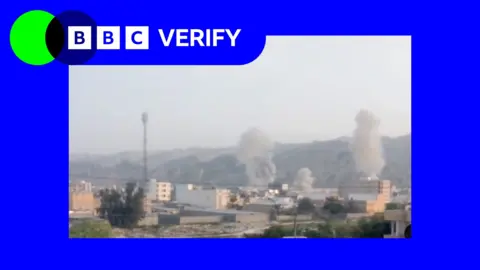
Multiple weapons experts have disputed a US claim that Iran may have been responsible for a deadly strike on the town of Lamerd on the first day of the war. Six experts — who examined footage of the strike and all commented independently — contested the US suggestion that it was an Iranian missile, citing the missile’s visual features, the way it exploded, its trajectory, and the number of strikes in the area as the basis for their analysis. Iranian officials reported that 21 people, including four children, were killed.BBC Verify originally reported on the strikes on 28 March, citing experts who mentioned that a US Precision Strike Missile (PrSM) was likely used. The US Central Command (Centcom) denied this, instead asserting that the footage of the attack was consistent with an Iranian Hoveyzeh cruise missile. However, the experts countered that the characteristics of the missile in the footage did not align with those of an Iranian weapon.On the same day, nearly 400 km east, additional strikes struck an Iranian school and a nearby military base in Minab, reportedly killing 168 people. Video analysis of that incident suggests a US Tomahawk missile struck the military compound.As the debate rages on, experts continue to assert that the strike on Lamerd was likely executed by a PrSM missile due to its high degree of technical sophistication not yet observed in Iranian missile technology. The contrasts will likely keep U.S. and Iranian military narratives under scrutiny as further evidence emerges.