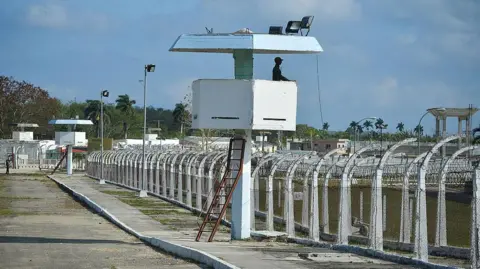
Cuba will free 2,010 prisoners as a 'humanitarian and sovereign gesture', its government has announced, as it faces continued political pressure from the US. Those freed will include foreign nationals, young people, women, and individuals over 60, a statement from the Cuban embassy in the US indicated on Thursday.
The release is taking place 'in the context of the religious celebrations of Holy Week, which is a customary practice in our criminal justice system'. Since returning to the White House, US President Donald Trump has made clear his desire to change Cuba's Communist leadership and has blocked oil shipments to the island, causing severe fuel shortages and widespread blackouts.
Last week, a Russian-owned tanker carrying an estimated 730,000 barrels of crude oil became the first to dock in one of Cuba's ports since early January, something Trump said he had 'no problem' with. According to Human Rights Watch, Cuba holds hundreds of political prisoners, with government critics subject to harassment and criminal prosecution.
Eligibility for release was based on 'a careful analysis' of offences, considering 'good conduct while in prison, the significant portion of their sentences served, and their health status', the embassy noted. This marks the second prisoner release of the year for Cuba, following the release of 51 prisoners in March after talks with the Vatican. In 2025, Cuba released 553 people in a deal brokered by the Vatican and the US.
Trump's rhetoric concerning Latin America has pivoted towards Cuba since the US seized Venezuela's former President, Nicolás Maduro, in a raid on Caracas in January. Venezuela's interim government has likewise released political prisoners since, though a prisoner rights group claims only a third of those promised have been let go.
Cuba's Communist government, led by President Miguel Díaz-Canel, is engaged in discussions with the Trump administration to find a resolution to the current stalemate. However, both sides have set forth a number of political and economic red lines, making it difficult to find common ground. Trump's administration has suggested military action as a potential means to alter Cuba's regime.
As the energy crisis deepens, the World Health Organization has reported that severe fuel shortages are impacting Cuban hospitals, and rolling blackouts have triggered rare public dissent. In response to these growing challenges, Russia has pledged to send a second oil tanker, providing crucial support to keep Cuba's economy afloat.
The release is taking place 'in the context of the religious celebrations of Holy Week, which is a customary practice in our criminal justice system'. Since returning to the White House, US President Donald Trump has made clear his desire to change Cuba's Communist leadership and has blocked oil shipments to the island, causing severe fuel shortages and widespread blackouts.
Last week, a Russian-owned tanker carrying an estimated 730,000 barrels of crude oil became the first to dock in one of Cuba's ports since early January, something Trump said he had 'no problem' with. According to Human Rights Watch, Cuba holds hundreds of political prisoners, with government critics subject to harassment and criminal prosecution.
Eligibility for release was based on 'a careful analysis' of offences, considering 'good conduct while in prison, the significant portion of their sentences served, and their health status', the embassy noted. This marks the second prisoner release of the year for Cuba, following the release of 51 prisoners in March after talks with the Vatican. In 2025, Cuba released 553 people in a deal brokered by the Vatican and the US.
Trump's rhetoric concerning Latin America has pivoted towards Cuba since the US seized Venezuela's former President, Nicolás Maduro, in a raid on Caracas in January. Venezuela's interim government has likewise released political prisoners since, though a prisoner rights group claims only a third of those promised have been let go.
Cuba's Communist government, led by President Miguel Díaz-Canel, is engaged in discussions with the Trump administration to find a resolution to the current stalemate. However, both sides have set forth a number of political and economic red lines, making it difficult to find common ground. Trump's administration has suggested military action as a potential means to alter Cuba's regime.
As the energy crisis deepens, the World Health Organization has reported that severe fuel shortages are impacting Cuban hospitals, and rolling blackouts have triggered rare public dissent. In response to these growing challenges, Russia has pledged to send a second oil tanker, providing crucial support to keep Cuba's economy afloat.